
 EN
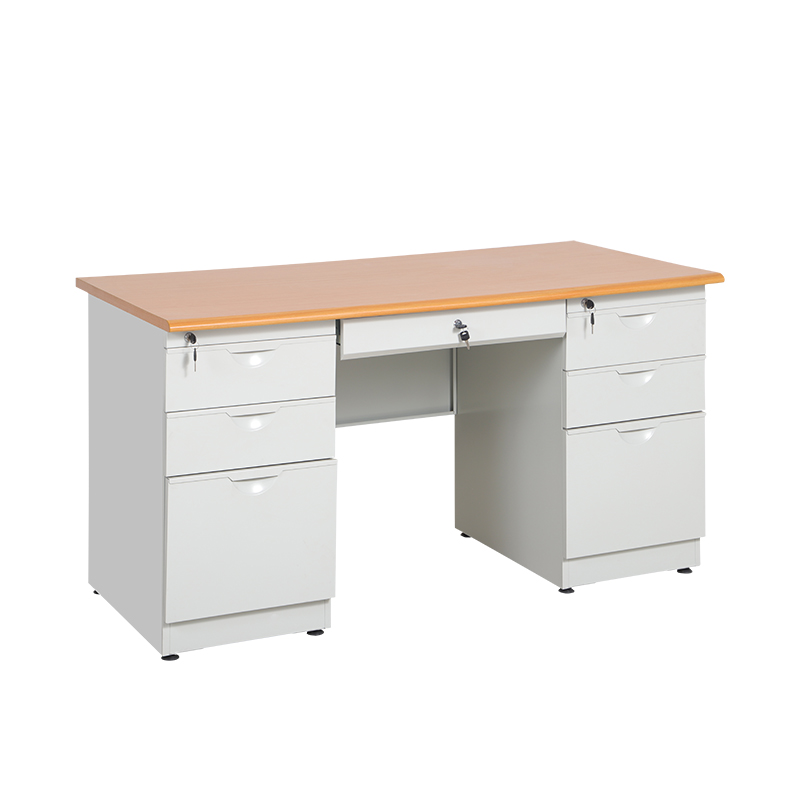
Corporate procurement officers expanding regional headquarters or outfitting industrial administrative buildings frequently face a costly surprise: workstations that look identical in online catalogs perform drastically differently six months after installation. Evaluating any commercial office desk for sale through an engineering checklist prevents wobbly frames, peeling finishes, and freight damage claims.
Hidden Operational Risks Behind Unverified Desk Listings
Browsing general wholesale listings without verifying underlying structural specifications exposes project budgets to rapid replacement cycles. Low-grade workstations built for occasional residential use quickly fail under multi-shift corporate workloads, dual-monitor clamp arms, and frequent floor reconfigurations.
Pedestal Drawer Sagging and Slide Track Blowouts
When employees load lower box and file drawers with dense paper binders and sample catalogs, thin drawer bottoms bow downward and scrape the frame below. Inferior two-section roller slides lose ball bearings under lateral pull forces, leaving drawers permanently wedged shut during busy workdays.
High Freight Volume and Transit Corner Crushing
Fully welded desks consume massive shipping container volume, inflating ocean freight per workstation. Conversely, poorly engineered knock-down desks packed in thin cartons suffer bent modesty panels and dented desktop corners before reaching the jobsite.
Core Structural Criteria on the B2B Desk Sourcing Checklist
Seasoned importers audit raw material grades, joinery tolerances, and surface pre-treatment lines before issuing purchase orders.
|
Audit Category |
Target B2B Specification |
Verification Method |
|
Raw Steel Substrate |
SPCC cold-rolled carbon steel per JIS G3141 / ASTM A1008 |
Mill test certificate and micrometer gauge check |
|
Frame Rigidity |
Interlocking tab-and-slot plus threaded M6/M8 steel inserts |
Lateral racking force test on assembled sample |
|
Surface Finish |
9-stage pre-treatment + epoxy-polyester powder coat |
ISO 2409 cross-cut adhesion grid inspection |
|
Drawer Suspension |
3-section full-extension steel ball-bearing telescopic slides |
Dynamic open-close cycle test under distributed load |
|
Export Packaging |
Knock-down flat-pack with honeycomb corner reinforcement |
Drop test verification per ISTA protocols |
Auditing Cold-Rolled Steel Thickness Without Coating Inflation
Unscrupulous vendors sometimes quote steel thickness after applying heavy textured powder coat, masking an undersized base sheet. Experienced buyers specify bare-metal cold-rolled steel thickness—typically 0.7 mm to 1.2 mm across load-bearing leg columns, crossbeams, and desktop stiffener channels—and measure uncoated sample cutouts with calibrated micrometers.
Evaluating Knock-Down Joinery and Reassembly Durability
Modern corporate offices reorganize floor layouts regularly. Steel desks engineered with precision CNC-punched interlocking slots and riveted steel nutserts can be disassembled and relocated multiple times without stripping threads, unlike particleboard panels held together by self-tapping wood screws.
Checking Wire Management and Ergonomic Leg Clearance
Commercial IT teams deploy dual monitors, VoIP phones, and under-desk power strips at every seat. Quality steel workstations integrate rolled-edge cable grommets that prevent cord chafing, concealed horizontal wire troughs beneath the work surface, and unobstructed knee-well geometry.
Industry Standards Governing Commercial Workstations
Credible B2B tenders reference ANSI/BIFMA X5.5 (Desk and Table Products), which defines concentrated and distributed functional load tests, leg strength evaluations, and drawer cycle durability benchmarks. Manufacturing facilities operating under ISO 9001 and ISO 14001 maintain traceable welding jigs and low-VOC powder recovery booths.
Workplace planners also align workstation layouts with OSHA ergonomic posture principles—ensuring adequate thigh clearance and glare-free matte desktop finishes—alongside NFPA 101 egress corridor requirements when arranging dense benching rows in open-plan offices. Luoyang Huawei Office Furniture Co., Ltd., founded in 1992 as the first Luoyang office furniture factory to pass third-party factory inspection and offer mail-order packing, engineers knock-down steel office desks around international inspection criteria for global distributors.
Actionable Steps for Sampling, Container Loading, and Upkeep
Structured execution from sample sign-off through facility maintenance protects long-term return on capital expenditure.
Golden Sample Sign-Off and Pre-Shipment Inspection
Always assemble one complete flat-pack sample using only the included instruction manual and hardware kit to verify hole alignment and assembly speed for local installers. Seal an approved golden sample on the factory floor so third-party pre-shipment inspectors can compare mass-production weld seams, lock keying, and color consistency directly against that benchmark.
Extending Desk Service Life in High-Traffic Offices
Equip all steel desk legs with heavy-duty nylon or threaded steel leveling glides so installers can eliminate floor rock on uneven concrete or carpet tiles. Periodically tighten monitor-arm clamp pads over reinforced desktop edges, and wipe powder-coated surfaces with pH-neutral cleaners rather than abrasive chlorinated solvents.
Frequently Asked Questions
How should B2B buyers verify steel thickness on an office desk for sale?
Request bare-metal SPCC thickness specifications in the purchase contract rather than finished thickness after painting. During sample evaluation or pre-shipment inspection, measure an unpainted interior flange or strip a small hidden test patch to verify base metal thickness with a digital micrometer, confirming load-bearing legs meet agreed structural specs.
Why do commercial buyers prefer knock-down steel desks over pre-assembled units?
Knock-down flat-pack steel desks drastically reduce cubic meter volume per unit, allowing importers to load significantly more workstations into a 40HQ ocean container. Flat cartons also fit easily into narrow building freight elevators and doorways, cutting last-mile rigging labor while lowering per-unit landed freight expenses.
What is the difference between 2-section and 3-section drawer slides on office desks?
Two-section slides leave the rear quarter of a file drawer trapped inside the pedestal, forcing staff to reach awkwardly for back folders. Three-section telescopic ball-bearing slides provide 100 percent full extension so hanging file frames lift straight upward cleanly while supporting heavier distributed paper loads without binding.
How important is pre-treatment before powder coating a steel office desk?
Chemical pre-treatment—including alkaline degreasing, rinsing, rust removal, and phosphating or silane conversion—is critical for corrosion prevention. Skipping thorough pre-treatment leaves microscopic rolling oils on the steel sheet, causing powder coat to bubble or peel along humid coastal environments or high-wear forearm contact edges within months.
Can steel office desks accommodate clamp-on dual monitor arms safely?
Yes, provided the rear desktop overhang features a folded box-channel return edge and an internal steel stiffener rib beneath the work surface. Buyers deploying heavy articulated monitor mounts should notify the OEM design team during ordering so reinforcement channels align directly with rear clamping zones.
What lock systems work best for multi-desk corporate deployments?
Commercial pedestals should feature removable-core cam locks with a master-keyed hierarchy and serialized key codes stamped directly on each lock face. Master keying allows facility security managers to open locked drawers instantly during employee turnover or emergency audits without drilling out cylinders.