
 EN
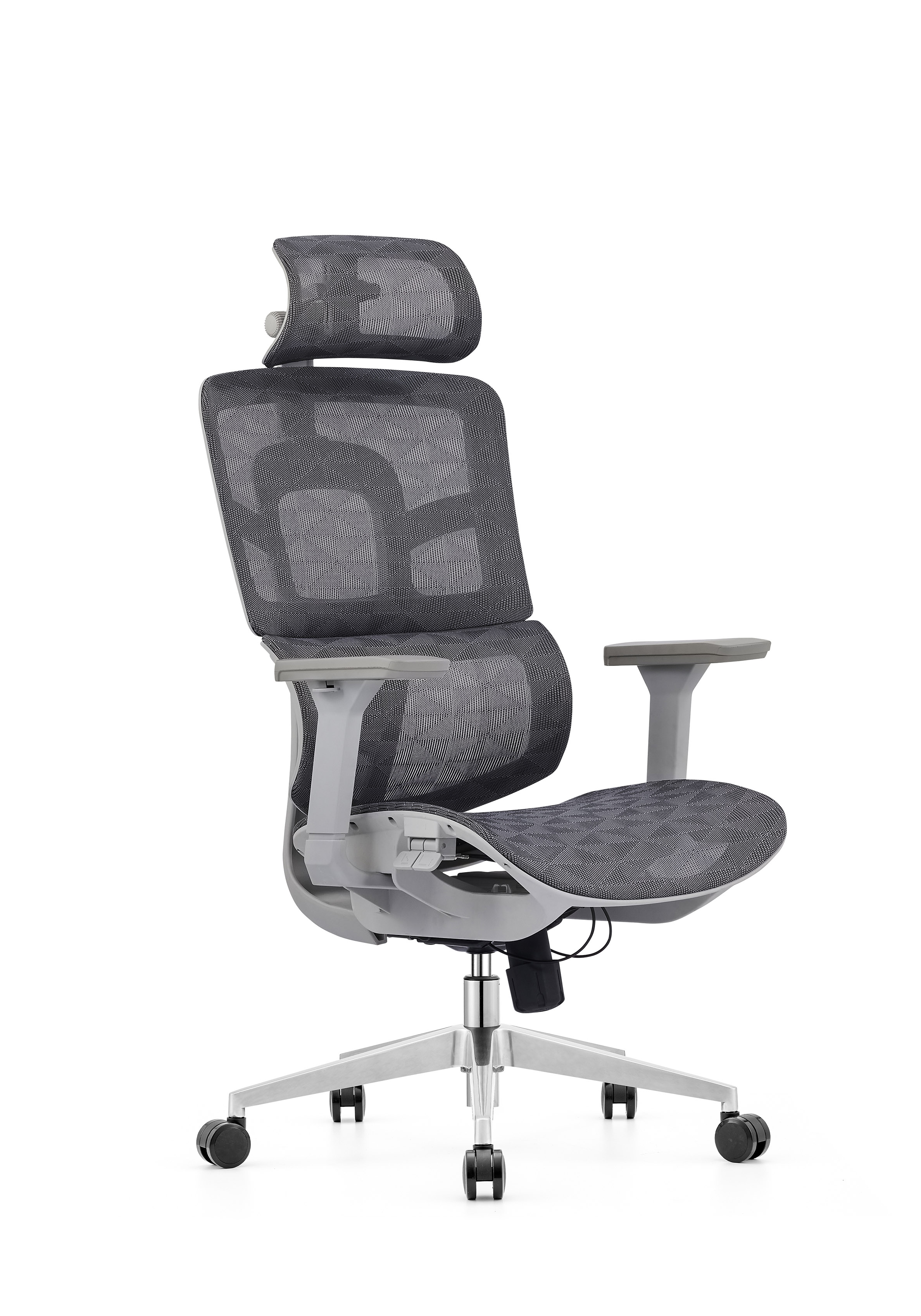
Stable Five-Star Base: Geometry, Material, and Compliance for Reliable Support
A heavy-duty visitor office chair starts with its base. Five legs distribute body weight evenly, reduce rocking, and support lateral movement—critical for stability during frequent entry and exit. Torsional stress resistance and BIFMA X5.11 compliance are the key determinants of whether that support holds up in high-turnover settings.
Torsional Stress Resistance and Weld Integrity in Commercial-Grade Bases
When a user shifts position or swivels, the base experiences twisting force. Commercial-grade five-star bases resist this torsion through optimized geometry—shorter lever arms between the column and floor contact points—and higher material thickness. This design reduces peak bending stress at the hub.
Welded steel bases rely on robotic welding and post-weld inspection to ensure uniform joint strength. Weak welds become crack initiation sites under high-cycle use; manufacturers validate integrity with tests such as 1,000,000 torsional cycles or application of 2,000 N lateral force. Reinforced nylon composite bases eliminate welds entirely but require strategic ribbing and glass-fiber reinforcement to match steel’s torsional rigidity.
For visitor seating, bases with continuous weld beads and oversized hub welds demonstrate significantly fewer fatigue failures after five years of daily turnover. Avoid visible porosity or uneven leg spacing—these defects concentrate stress and increase the risk of sudden leg separation. A stable base lowers injury risk and prevents floor damage.
BIFMA X5.11 Compliance: How Five-Leg Configuration Prevents Tipping Under Dynamic Load
BIFMA X5.11 is the leading standard for heavy-duty seating, evaluating stability, strength, and durability under repeated dynamic loads. The five-leg configuration widens the support polygon—the geometric area defined by all floor contact points—making it far less likely for a user’s center of gravity to move outside that boundary during leaning or shifting.
Compared to four-leg designs, which create narrow tipping lines along diagonals, five equally spaced legs reduce gaps between adjacent contact points. This improves forward, rear, and lateral stability—especially important when larger users generate side forces exceeding their body weight during quick turns. BIFMA X5.11 testing replicates these real-world conditions through standardized stability and strength cycles.
Reinforced steel hubs and welded leg inserts help maintain structural geometry after repeated impact. For high-traffic visitor chairs, this translates to fewer tip-over events, reduced floor scratches, stronger workplace safety audit outcomes, and lower furniture replacement frequency.
Class 4 Gas Lift and Reinforced Mechanism for Long-Term Visitor Office Chair Durability
100,000+ Cycle Fatigue Life vs. Standard 25,000: Real-World Implications for High-Traffic Areas
In reception areas, meeting rooms, and shared workpoints, visitor chairs undergo far more height adjustments than executive seating. Class 4 gas lifts are rated for over 100,000 actuation cycles—four times the typical 25,000-cycle lifespan of Class 2 or Class 3 units (component durability testing, 2024). That durability gap reflects superior seal integrity, thicker steel cylinder walls, and tighter manufacturing tolerances—all critical for resisting premature sag or sudden drop under dynamic sitting loads.
For facility managers, specifying Class 4 lifts is a proven lifecycle cost control measure. It lowers replacement frequency, minimizes user-facing disruptions, and ensures consistent performance across diverse body weights entering and exiting throughout the day.
Critical Interface Strength: Caster Stem Socket and Frame-to-Mechanism Reinforcement
A Class 4 gas lift only delivers its rated performance if interface points withstand real-world lateral forces. The caster stem socket must resist repeated side loading from rolling over carpet edges or shifting while occupied. Reinforced nylon or steel sockets—designed with tight dimensional tolerances—reduce wobble that accelerates stem fatigue.
Equally vital is frame-to-mechanism reinforcement: the mounting plate transfers both static body weight and dynamic reclining forces into the column. Weak plates or thin brackets can crack or loosen over time, causing instability even when the cylinder remains intact. High-quality mechanisms feature heavy-duty steel construction, stable locking positions, and smooth operation. Look for reinforced welds and torque-rated fasteners at the mechanism-to-frame joint—this integration ensures long-term stability during side entry, swivel, and height adjustment.
High-Load Frame Construction: Steel, Composites, and Joint Integrity
Powder-Coated Steel vs. Reinforced Nylon Composites: Weight, Rigidity, and Thermal Stability Tradeoffs
Heavy-duty visitor chairs commonly use either powder-coated steel or reinforced nylon composites for load-bearing frames. Powder-coated steel offers high rigidity and yield strength (250–400 MPa), maintaining dimensional stability up to ~150°C—ideal for prolonged 180 kg (400 lb) static loads. Reinforced nylon composites cut frame weight by 30–40% and dampen minor floor vibrations, but soften above 80–90°C and may creep under sustained stress.
Joint integrity differs: steel frames gain strength from gusseted welds, while nylon frames depend on threaded brass inserts to prevent stripping. Though nylon excels where corrosion resistance and portability matter, steel delivers more predictable long-term support in warm lobbies or high-traffic environments—where thermal cycling and constant use challenge material consistency.
Verified Load Capacity: Engineering Confidence for Diverse User Profiles
A dependable visitor office chair must handle diverse user weights without compromising stability or safety.
180 kg (400 lbs) Static & Dynamic Testing per BIFMA X5.11 — Why It Matters for Visitor Office Chair Deployment
BIFMA X5.11 requires verification of 180 kg (400 lb) capacity through both static and dynamic testing. Static testing confirms resistance to deformation under constant load; dynamic testing simulates the higher momentary forces generated during sitting down, shifting, and standing up. Because visitor seating faces unpredictable, high-frequency use in lobbies and waiting rooms, chairs that meet only minimal static thresholds often fail prematurely under repeated impact—posing safety risks and increasing replacement costs.
Specifying chairs tested to this full BIFMA X5.11 standard supports occupant safety, fulfills duty-of-care obligations, and extends service life—delivering measurable value across facility operations.
FAQ
Why are five-star bases recommended for office chairs?
Five-star bases distribute weight evenly, enhance stability during frequent entry and exit, and reduce the risk of tipping or rocking under lateral movement.
What is BIFMA X5.11 compliance?
BIFMA X5.11 compliance ensures the chair meets rigorous standards for stability, strength, and durability under repeated dynamic loads, reducing safety risks and extending lifespan.
Why is Class 4 gas lift preferred for visitor chairs?
Class 4 gas lifts are rated for over 100,000 cycles, offering superior durability compared to Class 2 or 3 lifts, making them ideal for high-traffic areas.
What materials are commonly used for high-load frame construction?
Powder-coated steel and reinforced nylon composites are common. Steel offers higher rigidity and predictable long-term support, while nylon is lighter and corrosion-resistant.
What is verified load capacity, and why does it matter?
Verified load capacity tests ensure chairs can handle heavy static and dynamic loads without deformation or failure, promoting safety and reducing replacement costs.
Table of Contents
- Stable Five-Star Base: Geometry, Material, and Compliance for Reliable Support
- Class 4 Gas Lift and Reinforced Mechanism for Long-Term Visitor Office Chair Durability
- High-Load Frame Construction: Steel, Composites, and Joint Integrity
- Verified Load Capacity: Engineering Confidence for Diverse User Profiles
- FAQ