
 EN
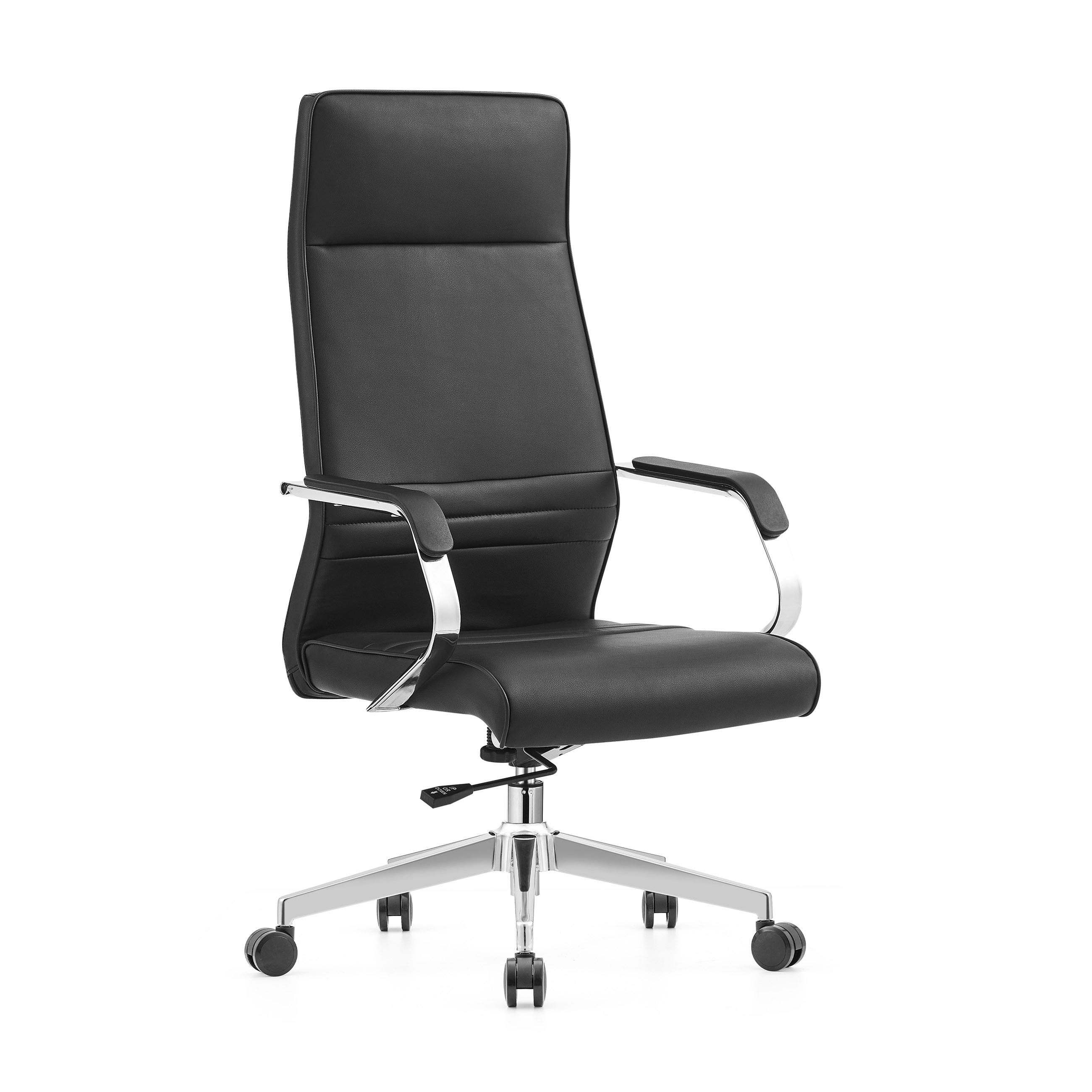
Why Steel Leather Office Chair Units Are the Top Choice for Commercial Buyers
Commercial buyers select steel leather office chair units because the pairing delivers two critical procurement outcomes: long service life and executive-grade appearance. A leather-upholstered chair with a steel frame resists daily abrasion, scuffing, and repeated loading more effectively than fabric or mesh alternatives—while maintaining a polished aesthetic in reception areas, boardrooms, and 24/7 operations.
Steel provides superior structural stiffness and weight capacity. Compared with aluminum, it offers higher tensile strength and greater resistance to deformation under continuous use—reducing tip-over risk and extending replacement cycles. This stability is essential in high-churn offices where seating endures 8–16 hours of daily use without loosening or shifting.
Leather upholstery adds measurable operational value. Full-grain or top-grain leather resists spills and wipes clean quickly, shortening janitorial time and ensuring presentability in client-facing spaces. Unlike mesh, leather surfaces do not trap dust as readily—supporting hygiene in shared offices and reducing early complaints about pilling, snagging, or color fade.
Together, steel and leather lower total cost of ownership. Though upfront pricing exceeds basic task chairs, the extended lifespan—commonly 7–10 years in managed facilities—reduces annualized spend. Buyers can standardize specifications across departments, simplify warranty tracking, and avoid mixed frame or upholstery components. This alignment is especially valuable for multi-site commercial portfolios seeking consistent quality, predictable asset life, and streamlined supplier audits.
How to Evaluate Leather Office Chair Suppliers: Certifications, Compliance, and Authenticity
BIFMA X5.1, EN 1335, and LWG Certification Requirements Explained
BIFMA X5.1 sets structural durability, stability, and cycle testing standards for office seating; EN 1335 defines dimensional, safety, and ergonomic requirements for European work chairs; and the Leather Working Group (LWG) audits tanneries for traceability, water management, and chemical handling. For any leather office chair order, require current certificates with valid audit IDs—and verify them directly through each issuing body’s official directory. Reliable suppliers provide full test reports covering steel frames, bases, mechanisms, and leather cover stock—not just summary pages. If a vendor shares only a logo or an expired certificate, treat the submission as incomplete. Confirm that the certificate scope covers the exact chair model and production site—not merely the parent company—and that verification includes the complete unit: upholstery, foam, casters, and gas lift. These steps significantly reduce the risk of accepting uncertified furniture.
Spotting 'Genuine Leather' Mislabeling in Bulk Orders
Request detailed material composition sheets—including hide type, finish, thickness, and country of origin—before payment. Many bulk shipments misrepresent polyurethane-coated split or bonded leather as “genuine leather.” Compare pre-production samples, production samples, and final shipment swatches under flex, light, and humidity tests. Require LWG or ISO 9001/14001 documentation from the tannery, plus a cut-away sample from one finished chair per batch. If certificates don’t match the tannery’s official audit register—or if the grain appears embossed rather than natural—halt loading and reject the lot. Specify exact hide content (e.g., “100% top-grain bovine leather”) in the order contract; the term “leather” alone is not a sufficient specification. A trustworthy supplier accepts third-party lab testing and permits random batch checks. Also confirm compliance with California Proposition 65 and REACH regulations for leather finishes.
Optimizing Large-Order Sourcing: MOQ, Lead Time, and FOB Cost Efficiency
For procurement teams sourcing leather office chairs, large-order decisions hinge on how minimum order quantity (MOQ), lead time, and FOB (Free on Board) terms interact. A 50-unit order requires less upfront capital but often sacrifices per-unit economics. A 200+ unit order unlocks wholesale pricing—though it demands stronger cash flow and more precise demand forecasting.
Tiered MOQ Models (50 vs. 200+ Units) and Their Impact on Leather Office Chair Wholesale Pricing
Bulk buyers typically see a 10–20% reduction in leather office chair wholesale pricing when scaling from 50-unit to 200+ unit tiers (2024 industry benchmarks). At 50 units, suppliers often rely on standard production batches and extended lead times of 30–45 days—raising unit costs as setup labor and materials are spread across fewer chairs. At 200+ units, suppliers optimize cutting, stitching, and steel frame assembly—reducing per-unit FOB cost by roughly 8–15% and shortening lead time to 25–35 days.
| MOQ Tier | Unit Cost Impact | FOB Lead Time | Working Capital | Best For |
|---|---|---|---|---|
| 50 units | +15–25% | 30–45 days | Low | Market testing, small office fit-outs |
| 200+ units | -8–15% | 25–35 days | Higher | Repeat orders, cost-sensitive procurement |
However, volume discounts only deliver value if inventory turnover remains steady. Request a transparent FOB breakdown—covering material, labor, overhead, and inland freight—before committing to a larger tier.
Risk-Mitigated Delivery: Logistics, Customs, and Pre-Shipment Quality Control
For commercial buyers, a leather office chair order should never ship without a risk-mitigated delivery plan. Pre-shipment quality control (PSQC) at the supplier’s facility confirms packaging, labeling, quantity, and structural compliance before cargo moves—and creates a documented condition record useful in disputes or insurance claims. Freight forwarders can arrange PSQC, cargo insurance, and real-time shipment visibility to mitigate financial loss from damage, theft, or delay. Logistics and customs risks must be addressed concurrently: confirm the correct 10-digit HS commodity code, include international freight and insurance in customs valuation, verify origin under substantial transformation rules, and align Incoterms (e.g., DAP or DDP) with the sales contract.
Steel Frame Tensile Testing and Leather Grain Consistency Protocols
For each batch, include the following checkpoints in the PSQC:
- Steel frame tensile testing: Require a report covering weld strength, frame load capacity, and coating adhesion—drawn from test samples of each production lot. Destructive or non-destructive tests must be performed on randomly selected units, and the report must match purchase order specifications.
- Leather grain consistency: Verify hide source, grain pattern, color tone, and thickness across all cartons—flagging any mix of top-grain and split leather. Side-by-side comparison under consistent lighting helps detect variation before carton sealing.
- Packaging and labeling: Confirm export carton markings, barcodes, and weight limits—critical for minimizing customs delays and freight damage.
These protocols make delivery risk measurable and prevent costly post-clearance rejections of defective units.
Frequently Asked Questions
Why is steel preferred over other materials for office chair frames?
Steel offers higher tensile strength and superior durability, which makes it ideal for heavy-duty use in high-churn office environments.
What is the benefit of using leather upholstery for office chairs?
Leather provides a polished aesthetic, easy cleaning, and enhanced durability compared to mesh or fabric, especially in client-facing areas.
How can bulk buyers verify the authenticity of leather materials?
Buyers should request detailed material composition sheets, require certification from recognized bodies like LWG, and inspect cut-away samples or swatches.
What are the common certifications needed for leather office chairs?
BIFMA X5.1, EN 1335, and Leather Working Group (LWG) certifications ensure durability, safety, and leather authenticity.
How does MOQ impact the pricing and lead time of bulk orders?
Smaller MOQ tiers have higher per-unit costs and longer lead times, while larger MOQs unlock discounts and faster production timelines.
What pre-shipment quality control measures should be undertaken?
Pre-shipment checks should verify steel frame testing, leather grain consistency, and proper packaging to reduce delivery risks.
Table of Contents
- Why Steel Leather Office Chair Units Are the Top Choice for Commercial Buyers
- How to Evaluate Leather Office Chair Suppliers: Certifications, Compliance, and Authenticity
- Optimizing Large-Order Sourcing: MOQ, Lead Time, and FOB Cost Efficiency
- Risk-Mitigated Delivery: Logistics, Customs, and Pre-Shipment Quality Control
-
Frequently Asked Questions
- Why is steel preferred over other materials for office chair frames?
- What is the benefit of using leather upholstery for office chairs?
- How can bulk buyers verify the authenticity of leather materials?
- What are the common certifications needed for leather office chairs?
- How does MOQ impact the pricing and lead time of bulk orders?
- What pre-shipment quality control measures should be undertaken?