
 EN
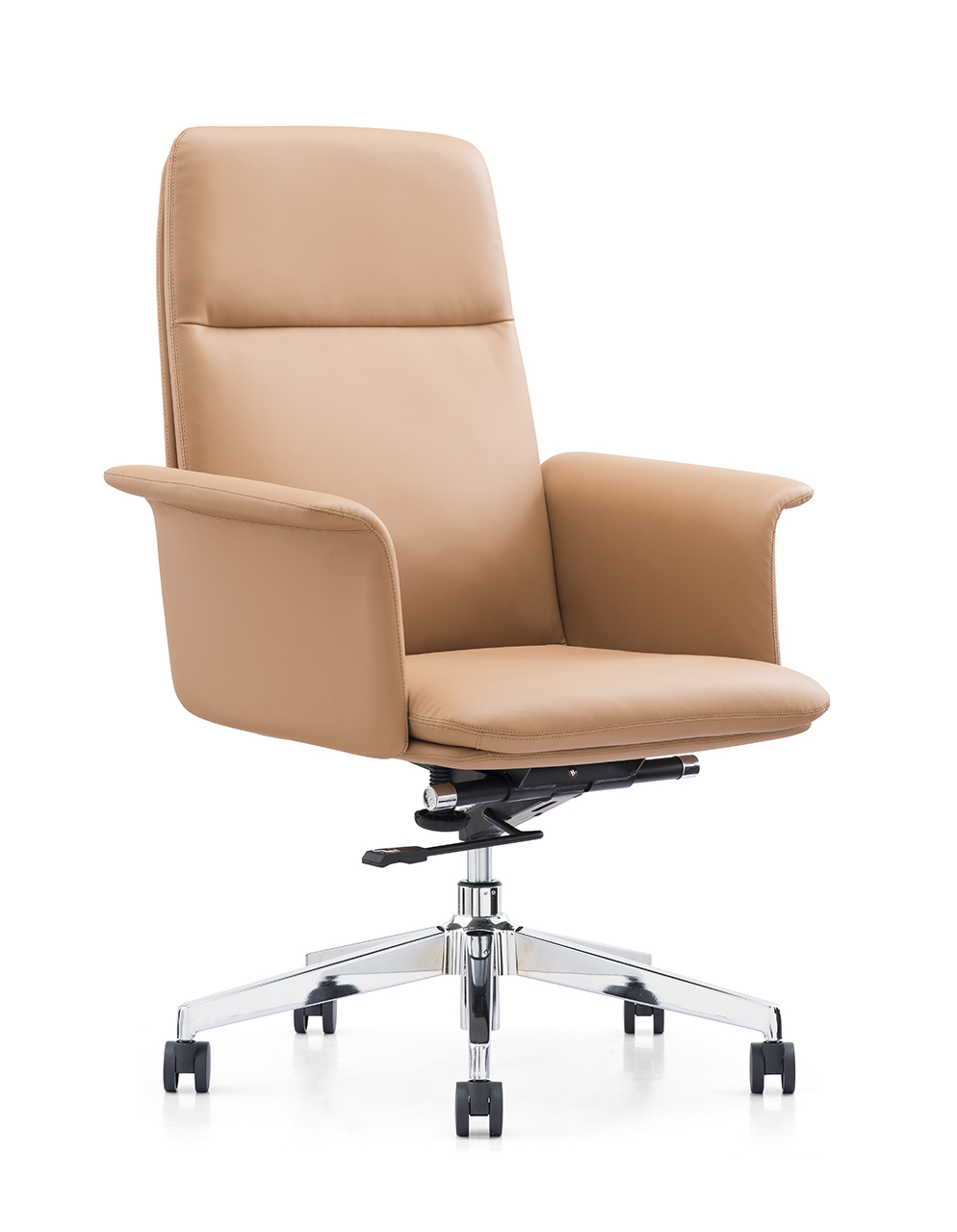
Why Steel Visitor Office Chairs Are the Strategic Choice for B2B Buyers
For B2B buyers, a steel visitor office chair delivers measurable value in reception, lobby, and waiting environments—spaces defined by constant turnover, frequent use, and zero margin for seating failure.
Durability and Total Cost of Ownership: 3.2× Longer Lifecycle vs. Plastic or Wood Alternatives
Steel frames outperform molded plastic and wood composites in impact resistance, moisture tolerance, and fatigue endurance—critical in high-traffic visitor zones where chairs routinely fail at joints, arm connections, and base supports. A well-engineered steel visitor chair—with reinforced welds and a durable powder-coated finish—maintains structural integrity beyond 10 years. Per BIFMA’s 2023 industry lifecycle benchmark, steel seating lasts 3.2× longer than plastic or wood alternatives.
| Material | Typical Commercial Lifecycle | Common Failure Modes | Replacement Impact |
|---|---|---|---|
| Steel | 10–12 years | Minor finish wear | Low |
| Plastic | 3–5 years | Cracks at joints and bases | High |
| Wood | 4–7 years | Joint loosening, surface damage | Medium |
Procurement teams should evaluate cost per seating-year—not unit price alone. A $180 steel chair used for 10 years costs $18 annually; a $75 plastic chair replaced every 3.5 years averages $21.40/year plus recurring sourcing, logistics, and disposal overhead. Across multi-location portfolios and annual procurement cycles, steel seating consistently lowers total cost of ownership while reducing operational friction.
ANSI/BIFMA Compliance as a Non-Negotiable Benchmark for Commercial Visitor Office Chair Safety and Performance
ANSI/BIFMA X5.1 is the definitive standard for commercial visitor seating—testing load capacity, backrest strength, stability, and cyclic durability under real-world conditions. Passing this standard signals repeatable performance, not just theoretical safety. In corporate, healthcare, and government procurement, current ANSI/BIFMA compliance is often contractually mandatory.
Buyers must require third-party test reports—not self-declared statements—to mitigate liability risk. Independent verification confirms the chair withstands repeated impacts, lateral arm pressure, and dynamic weight shifts without structural compromise. This directly supports workplace safety programs and reduces incident risk for both employees and visitors. For enterprise deployments, standardized, certified seating simplifies vendor evaluation, accelerates approvals, and strengthens the strategic purchasing narrative.
How to Evaluate and Select Reliable Steel Visitor Office Chair Suppliers
Verifying Core Capabilities: Certified Welding, Powder-Coating Consistency, and Load-Test Documentation
Begin supplier evaluation with objective evidence—not marketing claims. Confirm welding meets structural demands: request AWS D1.1 or ISO 3834 certification for MIG/TIG processes, and inspect weld documentation for penetration depth, uniformity, and absence of porosity or undercut—especially at high-stress points like seat-to-leg junctions.
Powder-coating consistency is equally critical. Require test reports showing film thickness (60–80 microns) and ASTM D3359 adhesion results. Without verified coating quality, chairs in heavy-use environments often chip or corrode near weld seams within the first year.
Finally, demand full load-test documentation before accepting pre-production samples—including third-party static load testing at 113 kg (250 lb) and cyclic testing to ≥100,000 cycles per ANSI/BIFMA X5.1-2017. Ensure reports reflect actual batch specifications—not generic sample certificates.
Assessing Scalability: MOQ Flexibility, Tiered Pricing, and Multi-Location Deployment Support
Once core quality is validated, assess scalability rigorously. Start with MOQ flexibility: a supplier requiring 1,000 units may block a 200-unit pilot rollout. Request a written tiered pricing schedule covering pilot (100 units), standard (500), and enterprise (1,500+) volumes—with documented price reductions of 8–12% between tiers.
For multi-location rollouts, verify operational readiness: ask for examples of split-container shipments, regional warehousing support, consolidated invoicing, and per-address delivery scheduling. Confirm whether you’ll have a dedicated account contact and a single escalation path—not fragmented support across regions. Also secure written lead-time guarantees for reorders above 300 units to prevent deployment delays.
Navigating Global Sourcing Logistics for Steel Visitor Office Chair Units
Regulatory Readiness: REACH, CPSC, and Steel Coating Compliance for International Shipments
Before freight booking, confirm regulatory alignment for both origin and destination markets. REACH restricts lead, cadmium, and hexavalent chromium in coatings entering the EU; the U.S. CPSC enforces lead content limits and structural safety for commercial seating. Request up-to-date, batch-specific powder-coating test reports from an accredited lab—covering total lead and soluble heavy metals—and embed compliance certification requirements directly into the purchase agreement.
Non-compliant surface treatments are among the top causes of customs detention. Proactive verification avoids port holds, costly rework, and downstream client exposure—while accelerating clearance and protecting brand reputation.
Freight Efficiency: Optimizing Palletization (24 Units/Pallet) and FCL/LCL Decisions for Cost and Speed
At 24 units per pallet, a standard 40-foot container holds 264–288 steel visitor office chairs. Full container load (FCL) delivers lower per-unit freight costs, reduced handling damage, and faster transit times. Less-than-container load (LCL) suits small pilots but adds consolidation delays, documentation complexity, and higher risk of transit damage.
Before comparing quotes, validate pallet dimensions, stack height, and gross weight—steel seating’s density affects freight class classification and final landed cost. For orders exceeding ~10 pallets (240+ units), FCL is almost always the most cost-effective and reliable option.
FAQ
Q: Why are steel visitor office chairs considered a better investment than plastic or wood alternatives?
A: Steel visitor chairs offer superior durability, lasting 3.2× longer than plastic or wood chairs. This reduces the total cost of ownership and minimizes replacement and maintenance expenses.
Q: What safety and performance standard should buyers look for in steel visitor office chairs?
A: Buyers should ensure ANSI/BIFMA X5.1 compliance, as it signifies the chair’s reliability in load capacity, stability, and durability under real-world conditions.
Q: What certifications or quality checks are essential when choosing a supplier?
A: Look for AWS D1.1 or ISO 3834 welding certifications, powder-coating consistency tests (ASTM D3359), and third-party load testing documentation to ensure product quality.
Q: What factors should be considered for global sourcing of steel visitor chairs?
A: Check REACH and CPSC regulatory compliance, optimal palletization (24 units/pallet), and decide between FCL or LCL freight options based on order size and cost efficiency.