
 EN
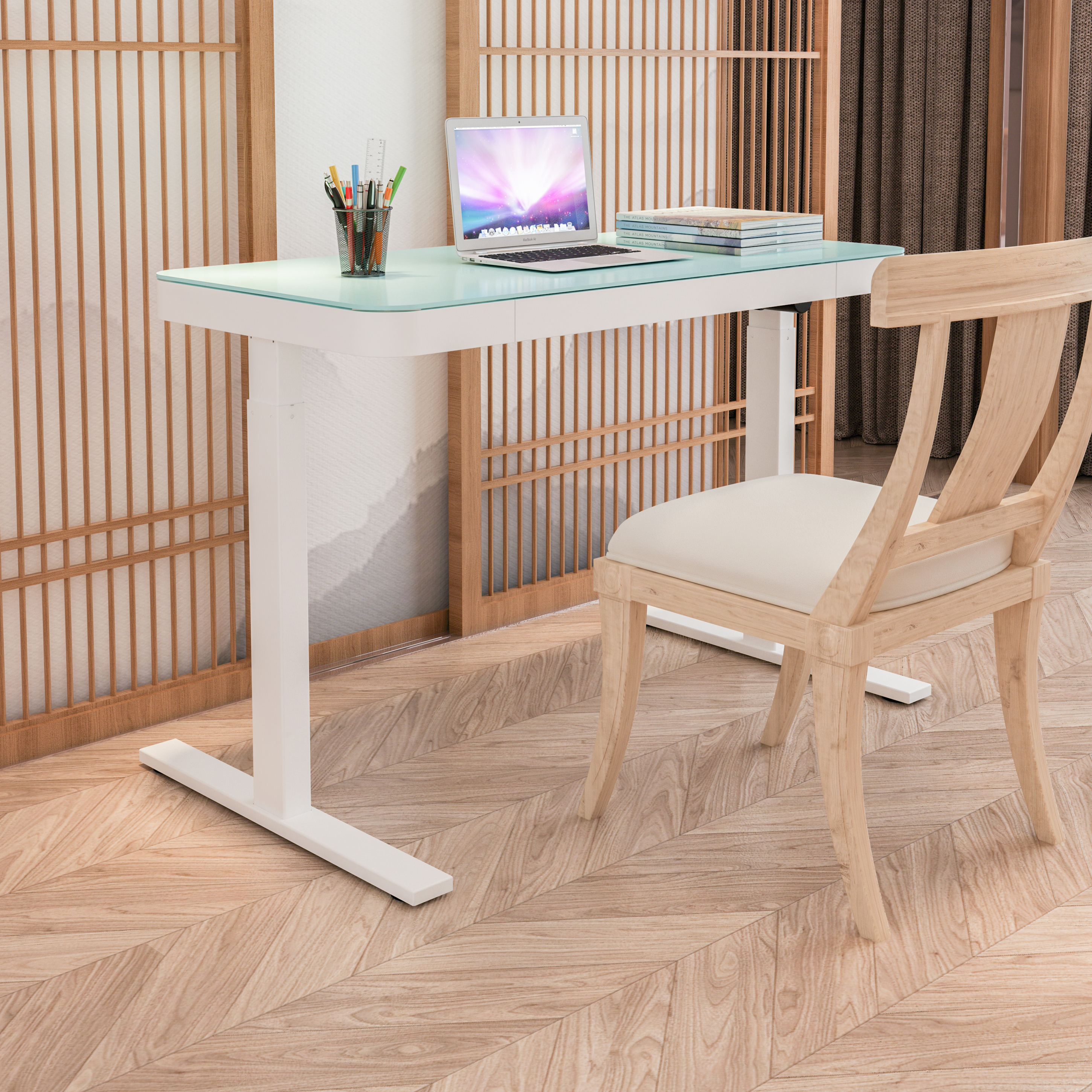
Specifying furniture for government tenders, school districts, or industrial plant offices leaves zero margin for vague catalog descriptions. Two listings advertising a commercial office desk for sale may look identical under studio lighting while differing entirely in under-surface stiffening ribs, lock cylinder tolerances, and corrosion resistance.
Real-World Failures Caused by Overlooking Technical Specs
Facility managers overseeing multi-site office rollouts routinely encounter premature wear when procurement contracts omit measurable engineering tolerances. A workstation lacking structural reinforcement beneath the center span begins oil-canning—flexing inward with an audible pop—whenever staff lean onto the worktop.
Surface Rust Creeping From Unsealed Weld Seams
In humid climates or non-climate-controlled warehouse offices, moisture penetrates unsealed spot-weld crevices and raw sheared steel edges underneath the desk. Within a single rainy season, reddish oxide streaks stain office carpets and weaken lower leg joints.
Key Duplication Chaos Across Large Floorplates
Budget lock cylinders with tiny key-code pools repeat identical keys every ten or twenty desks. Confidential HR files and personal electronics stored inside desk pedestals become vulnerable when neighboring workstation keys unintentionally unlock adjacent drawers.
Six Non-Negotiable Technical Specifications to Verify
Before approving a proforma invoice, technical buyers cross-check six measurable parameters on factory specification sheets and physical prototypes.
|
Technical Specification |
Commercial Requirement |
Risk If Ignored |
|
Base Steel Gauge & Grade |
0.7–1.2 mm cold-rolled SPCC steel sheet |
Frame racking and desktop flexing |
|
Under-Top Stiffener Channels |
Full-length welded omega or hat-section ribs |
Center-span sag under heavy equipment |
|
Coating Film & Adhesion |
60–80 microns epoxy-polyester; Class 0/1 cross-hatch |
Chipping, scratching, and under-film rust |
|
Pedestal Slide Rating |
Cold-rolled steel 3-stage ball-bearing slides |
Jammed file drawers under binder weight |
|
Lock Key Differing |
High-differ master-keyed cam cylinder system |
Cross-opening security breaches |
|
Carton Drop Integrity |
Multi-ply corrugated box + edge guards + foam |
Dented panels and misaligned bolt holes |
1. Bare Cold-Rolled Steel Gauge Across Load Zones
Smart engineering allocates heavier steel gauges to high-stress leg columns, cross-rails, and cantilever brackets while keeping modesty panels trim to manage unit weight. Always confirm exact millimeter thickness by component rather than accepting an ambiguous range on a brochure.
2. Under-Desktop Omega Stiffener Rib Geometry
A flat steel or laminated steel-framed worktop requires welded hat-section (omega) channels running lengthwise and crosswise underneath. Sound-dampening adhesive pads placed between the stiffener rib and top sheet eliminate hollow metallic ringing during typing.
3. Pre-Treatment Chemistry and Powder Film Thickness
Verify that the production line executes full multi-stage degreasing and conversion coating before electrostatic spraying. A cured film thickness between 60 and 80 microns strikes the ideal balance: thin coats expose steel peaks to rust, whereas overly thick coats turn brittle under sharp edge impacts.
4. Anti-Tilt Interlocks and Full-Extension File Suspension
File pedestals attached to or tucked beneath desks need positive mechanical anti-tilt interlocks allowing only one heavy drawer to open at a time on freestanding mobile units, paired with precision steel ball-bearing runners sized for A4, Letter, or Legal hanging folders.
5. Master-Keyed Cylinder Differ Count and Core Swappability
Specify lock cylinders offering hundreds of unique key combinations along with a facility master key and core-removal tool so corporate security teams can re-key workstations in seconds.
6. Mail-Order Grade Knock-Down Packaging Architecture
Even flawless steel fabrication fails if transit cartons burst. Established in 1992, Luoyang Huawei Office Furniture Co., Ltd. became the first Luoyang office furniture manufacturer to engineer dedicated mail-order packing and pass third-party factory inspection, designing internal panel separators that stop painted steel parts from rubbing together over ocean swells.
Authoritative Testing Frameworks Behind Reliable Desks
Technical specifications gain teeth when anchored to recognized testing protocols. ANSI/BIFMA X5.5 governs commercial desk structural integrity, testing horizontal leg side-thrust, concentrated corner loading, and thousands of repetitive drawer cycles. Coating adhesion is objectively verified via ISO 2409 (or ASTM D3359) cross-cut tape testing, while ISO 9227 salt-fog chambers validate anti-corrosion longevity. Workspace planners also review OSHA computer workstation guidelines to ensure desktop height around 720 mm to 750 mm supports neutral wrist and knee alignment.
Practical Inspection and Daily Care Guidelines for Buyers
Equipping local warehouse receivers with simple inspection tools catches variances early.
Simple On-Site Receiving Checks
Use a digital coating thickness gauge on three random panels per batch, test all drawers with actual hanging folders before signing off installation, and confirm floor leveling glides feature minimum 15 mm vertical thread adjustment.
Routine Care for Long-Term Structural Stability
Instruct facility janitorial staff to avoid hydrochloric or bleach-based cleaners near bare chrome lock faces. Re-check structural crossbeam fasteners six months after initial installation once building floors and carpet pads settle fully.
Frequently Asked Questions
Why do steel office desks need sound-deadening stiffeners underneath the top?
Without internal stiffening ribs and acoustic damping pads, wide steel desktop sheets flex slightly and resonate like a drumhead whenever keyboards, coffee mugs, or binders touch down. Welded omega-profile channels bonded with high-density damping strips create a solid, quiet, non-flexing writing surface comparable to thick architectural timber.
What coating thickness is optimal for commercial steel office desks?
A cured electrostatic epoxy-polyester powder film between 60 and 80 microns delivers optimal surface hardness and flexibility. Coatings thinner than 45 microns risk microscopic pinholes that invite humidity corrosion, while coatings exceeding 110 microns accumulate internal stress at 90-degree folded corners and chip more easily on impact.
How does an ISO 2409 cross-hatch adhesion test work during desk QC?
Quality inspectors score a tiny grid of perpendicular cuts right down to the bare metal substrate on a hidden panel flange, brush away loose flakes, apply standardized pressure-sensitive tape, and pull sharply. A passing commercial finish retains crisp square edges with zero coating detachment along the grid intersections.
Are steel office desks suitable for non-air-conditioned warehouse offices?
Properly pre-treated, powder-coated cold-rolled steel desks excel in warehouse dispatch offices and plant floor supervisor stations where high humidity, temperature swings, and forklift dust warp particleboard or delaminate PVC edge banding. Selecting stainless leveling feet further protects leg bases against damp concrete slab wicking.
What hanging file sizes fit inside standard commercial steel desk pedestals?
Export-grade steel office desk pedestals typically include adjustable snap-in divider bars engineered to accept international A4, North American Letter, and Legal-size suspension folders interchangeably. Buyers should still confirm exact internal drawer width and vertical folder-tab clearance on technical shop drawings prior to production.
How can distributors minimize scratch claims on dark-colored steel desks?
Matte micro-textured or fine sand-grain powder finishes conceal everyday micro-scratches, fingerprints, and optical glare far better than smooth high-gloss dark paints. Pairing micro-textured finishes with PE foam interleaf sheets between every stacked flat-pack component prevents transit scuffing during container transport.
Table of Contents
- Real-World Failures Caused by Overlooking Technical Specs
-
Six Non-Negotiable Technical Specifications to Verify
- 1. Bare Cold-Rolled Steel Gauge Across Load Zones
- 2. Under-Desktop Omega Stiffener Rib Geometry
- 3. Pre-Treatment Chemistry and Powder Film Thickness
- 4. Anti-Tilt Interlocks and Full-Extension File Suspension
- 5. Master-Keyed Cylinder Differ Count and Core Swappability
- 6. Mail-Order Grade Knock-Down Packaging Architecture
- Authoritative Testing Frameworks Behind Reliable Desks
- Practical Inspection and Daily Care Guidelines for Buyers