
 EN
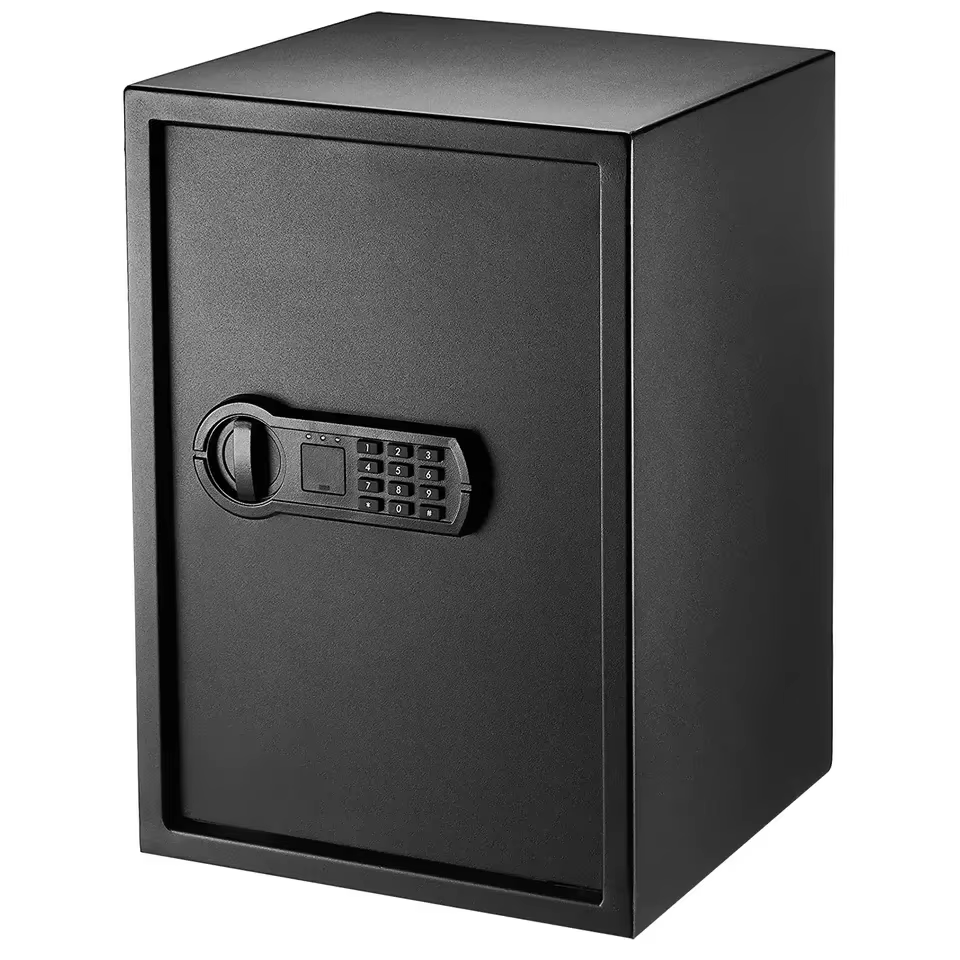
A branch office called a locksmith on a Monday morning because an electronic safe keypad had gone dark over the weekend. The cell was flat, the override key had never been issued, and the emergency opening instruction was inside the cabinet. Nothing had been forced and nothing was broken. An electronic safe adds a powered layer to a steel enclosure, and that layer needs an owner, a spare part and a written procedure just as much as the boltwork needs a drawing. Sourcing one well is mostly about deciding what happens when the battery dies.
Where electronic lock orders surprise buyers
An electronic safe is usually specified as if the lock were a fitting rather than a small system with a power supply and a memory.
A flat cell with no override plan
For an electronic safe, ask for the cell type, the expected replacement interval under a stated test pattern, the low-battery indication and whether the compartment can be opened without unlocking the door. Request the emergency opening procedure and decide who holds the override key, then seal it in a documented location. Where a unit is hardwired, ask for the wiring diagram and the cable entry detail. NFPA 70 covers the electrical installation side, and that scope belongs to the site’s installer rather than the cabinet factory. An electronic safe with no override route turns a routine battery change into an unplanned service visit.
Audit claims that were never specified
Some buyers expect an electronic safe to keep a record of openings and code changes because the product has a keypad. That feature is not automatic. Ask whether the controller stores events, how many users can be enrolled, whether a supervisor code exists, how a leaver’s code is retired and how the log is read out. State the requirement in the order if it matters. Ask for a documented keypad cycle test and the operating temperature range for the electronics, since a unit in an unconditioned store room sees different conditions from one in a reception area. An electronic safe specified by a photograph usually arrives with fewer functions than the buyer assumed.
What the electrical layer actually contains
Understanding the electronic safe signal path makes the specification shorter, because a buyer learns which few parts decide daily behaviour.
Keypad, controller and the solenoid interface
In an electronic safe, a keypad matrix feeds a controller that compares the entered code against values held in non-volatile memory, then energises a solenoid or a small motor to retract the bolt. The useful detail is the interface: the solenoid should release the boltwork, not carry the door’s alignment load. Ask for the reinforced lock seat, the rod guides and a documented cycle test on the assembled door. Look at the strike pockets and the plate behind the keypad. A UL 768 listing applies to combination locks as devices and does not rate this interface, so request the assembly test separately.
Power, memory and the low-battery chain
For an electronic safe, ask where the cell sits, how it is retained, whether polarity is marked and how the controller behaves as voltage falls. A sensible design warns early, keeps the stored codes intact through a change of cell and refuses to leave the bolt in a half-retracted state. Request the low-battery indication type, the emergency power contact if one exists, and the reset procedure after a flat cell. REACH and RoHS declarations should cover the board, cell and keypad. Where a powered keypad is wired in rather than battery-fed, NFPA 70 applies to the installation and the cable entry needs a strain relief.
Standards that split the electrical from the steel
For an electronic safe, a cabinet rating and an electrical installation are different scopes, and one certificate never covers both.
Reading UL 768, NFPA 70 and REACH side by side
The electrical side is where NFPA 70 earns its place, covering a wired keypad and its cable entry. Product claims sit elsewhere: UL 768 for the lock, UL 72 for fire exposure to records, UL 687 or EN 1143-1 for forced entry, EN 14450 for lighter duty. Have the test house’s ISO/IEC 17025 accreditation and the model code on each report. Materials declarations under REACH and RoHS cover the board and cell; ANSI Z535.4 governs the battery and override label. OSHA 29 CFR 1910.176(b), NFPA 1 and NFPA 101 belong to the site plan. None of these documents describe the cell access, so put that in the drawing.
Where ISO 9001 and ANSI Z535.4 keep sites aligned
Keeping the keypad assembly, cell type and instruction sheet consistent across runs is an ISO 9001 concern; ask for a controlled drawing with a revision number and an inspection record from a real batch. ISO 2859-1 helps set a goods-in sampling plan, and Coating evidence around the keypad cut-out normally pairs an adhesion method with salt spray exposure. Add a written packaging specification with a transit test, since a shock in transit can loosen a connector. Huawei Furniture, a Luoyang steel office furniture maker founded in 1992, works from customer plans and samples with an in-house design team, which is the arrangement that lets a buyer get the battery bay and cable route onto a controlled drawing before tooling starts.
A commissioning sheet per unit
Put one electronic safe page in the file: the lock model and drawing revision, the cell type and replacement owner, the low-battery indication, the override key location, the emergency opening procedure, the supervisor code custody rule, the user enrolment limit and the event log requirement if any. Require written approval before any keypad or controller substitution and keep one sealed sample with its instruction sheet. At goods-in, power each sampled unit, enrol a test code, open and close three times, then remove and refit the cell and confirm the code is retained. Record results by serial number. An electronic safe program commissioned that way avoids the Monday morning call-out entirely.
Frequently Asked Questions
What should be specified about battery power?
For an electronic safe, the cell type, the expected replacement interval under a stated test pattern, the low-battery indication and whether the compartment opens without unlocking the door. Add the emergency opening procedure and the override key location. Request the reset behaviour after a flat cell and check that stored codes survive a battery change. A hardwired unit needs a wiring diagram and a strain-relieved cable entry, with NFPA 70 covering the installation.
Does a keypad automatically provide an opening log?
No. Ask whether the controller stores events, how many users can be enrolled, whether a supervisor code exists, how a leaver’s code is retired and how the log is read out. State the requirement in the order if an audit trail matters. Also request a documented keypad cycle test and the operating temperature range for the electronics, since site conditions vary.
Which standards cover the lock versus the enclosure?
UL 768 applies to combination locks, UL 687 and EN 1143-1 to attack resistance, EN 14450 to lighter secure storage in S1 and S2 classes, and UL 72 to fire endurance classes for records. NFPA 70 covers powered keypad wiring, NFPA 1 and NFPA 101 placement and escape routes, and OSHA 29 CFR 1910.176(b) handling. REACH and RoHS cover the board, cell and keypad, and ANSI Z535.4 the label.
How should the solenoid connection be judged?
The solenoid should release the boltwork rather than carry the door’s alignment load. Ask for the reinforced lock seat, rod guides, strike pockets and a documented cycle test on the assembled door. A UL 768 listing rates the combination lock as a component and does not cover this interface, so request the assembly test separately.
What belongs on a commissioning sheet?
The lock model and drawing revision, cell type and replacement owner, low-battery indication, override key location, emergency opening procedure, supervisor code custody rule, user enrolment limit and any event log requirement. Require written approval before a keypad or controller substitution. Keep one sealed sample with its instruction sheet for later batches.
What should goods-in test on these units?
Use a sampling plan such as ISO 2859-1. Power each sampled unit, enrol a test code, open and close three times, then remove and refit the cell and confirm the code is retained. Check the keypad surround, the label and the carton interior against the sealed sample. Record findings by serial number rather than as a general pass, and log any connector that worked loose in transit.