
 EN
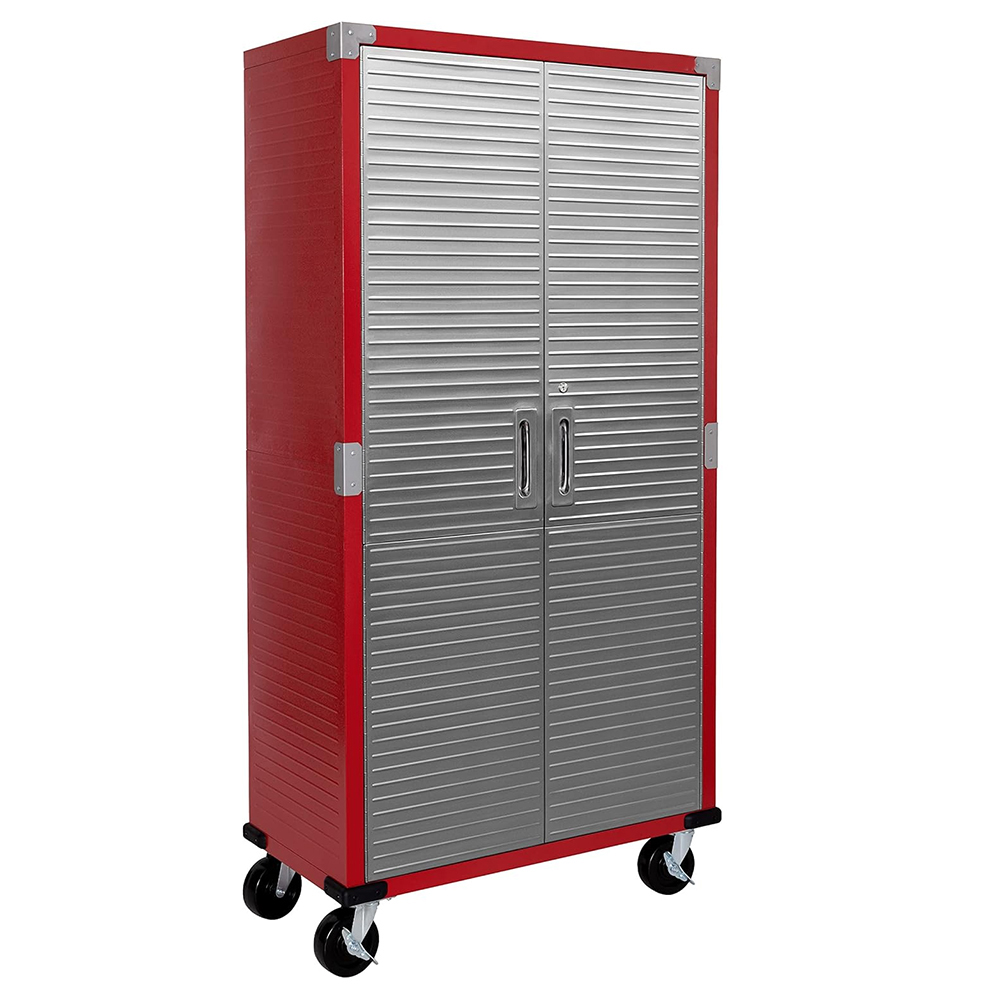
Structural Integrity and Load Capacity: Why Gauge, Welding, and Shelf Rating Define B2B-Grade Storage Metal Cabinets
B2B buyers need a storage metal cabinet that resists daily freight loads, tool weight, and parts density without racking or shelf deflection. Three engineering signals separate industrial-grade units from light-duty alternatives: 14-gauge steel, all-welded joinery, and a clearly rated shelf system.
14-Gauge All-Welded Steel Construction: Balancing Strength, Weight, and Modular Deployment
In commercial settings, 14-gauge steel—approximately 0.075 inches thick—offers a deliberate balance between load-bearing strength and manageable cabinet weight. Thicker than 18- or 22-gauge alternatives, it resists dents, twisting, and bending under repeated use. All-welded construction eliminates the loosening and creaking common in bolted or riveted designs, increasing frame stability and extending service life. Reinforced corner joints and continuous welds maintain squareness across the unit’s lifespan, supporting modular deployment: facilities can reposition cabinets or add units without compromising alignment. This rigidity also reduces racking—the diagonal deformation caused by shifting heavy loads—so shared workshops and repair bays experience fewer door alignment issues over time. For procurement teams, the result is safer storage of heavy components, reduced replacement frequency, and better tolerance for forklift-adjacent contact and high-cycle drawer operation.
1,450 lbs Per Shelf at 3-Inch Adjustable Centers: Engineering for Real-World Industrial Use
A 1,450-pound per-shelf rating supports dense storage of machined parts, tooling, and bulk fasteners without requiring multiple cabinets. The 3-inch adjustable centers let facility managers reconfigure vertical space to match changing inventory heights—reducing wasted airspace and improving picking ergonomics. While this rating assumes evenly distributed loads, concentrated point loads may require lower shelf positions or supplemental support to prevent localized stress. In multi-user environments, posted load labels and color-coded shelf clips help enforce safe weight limits and reduce misuse. Unlike lighter cabinets that degrade under load cycling, heavy-duty designs retain shelf flatness and door alignment year after year. This combination of high capacity and fine adjustment intervals simplifies procurement: one cabinet type serves multiple departments without custom fabrication or field drilling, reducing SKU complexity and enabling maintenance teams to swap shelf positions in minutes—not hours. Facilities can standardize on this rating for future expansion without re-engineering storage layouts.
Security and Accountability: Locking Systems Built for Multi-User Commercial Environments
In shared commercial settings, a storage metal cabinet must do more than hold tools; it must restrict access and create audit-ready accountability. B2B buyers should evaluate locking hardware as a core specification, not an add-on.
3-Point Locks, Pry-Resistant Frames, and Tamper-Evident Design
A 3-point lock secures the door at top, center, and bottom, distributing force across the frame and minimizing single-point pry vulnerability. Pry-resistant frames feature recessed or overlapping door edges, making flat-bar entry significantly more difficult. Tamper-evident design adds visible cues—such as breakaway seals, painted screw heads, or engineered deformation zones—that expose forced entry attempts quickly. For multi-user storage metal cabinets, these features move security from passive deterrence to documented control. Heavy commercial Grade 2 locking hardware balances cost and resistance for office furniture, classrooms, and apartment common areas. Higher-security sites may specify upgraded cylinders or reinforced strike plates. This layered approach protects high-value tools and confidential records without adding excessive weight or daily handling friction.
Scalable Access Control: Padlock Hasps, Keyed-Alike Sets, and Facility-Wide Integration
Effective access control scales without adding administrative burden. Integrated padlock hasps accept standard or disc padlocks, letting each department use its own lock for visible accountability. Keyed-alike sets allow one key to open multiple cabinets, reducing key rings while preserving compartment-level isolation. Tiered access becomes practical: custodial staff, IT, and production teams can hold distinct keys even when cabinets sit side by side. For broader facility integration, specify lock bodies that accept interchangeable cores or retrofit electronic access modules later. Because lock upgrades often outpace furniture replacement, choosing standard lock cutouts protects procurement value over a 10-year service cycle—and avoids proprietary mechanisms that limit rekeying or create vendor lock-in.
B2B-Specific Functionality: Modularity, Mobility, and Smart Compartmentalization for Shared Workspaces
Configurable 4-Door Layouts and User-Isolated Compartments
Configurable four-door designs allow one cabinet to become four independently locked sub-units—matching multi-user facilities without multiplying floor footprint. Each compartment can be assigned to a specific employee, shift, or work group, reducing pilferage and cross-department confusion. In warehouses and maintenance bays, user-isolated storage supports tool accountability while keeping high-use items visible. Hinges, dividers, and shelf positions are field-adjustable so the same unit adapts—from parts storage to PPE distribution—as workflow changes. This flexibility supports shared workspaces where teams rotate and responsibilities shift during the day. A storage metal cabinet built around configurable compartments avoids the expensive replacement cycle of fixed single-purpose units, reducing SKUs and simplifying reconfiguration for procurement teams.
Industrial Casters, Flat-Rate Shipping Optimization, and Floor-Protection Features
Industrial casters rated for full load allow a loaded cabinet to move for cleaning, re-layout, or consolidation without unloading shelves—locking wheels ensure stability when stationary. Flat-rate shipping optimization often drives design: knockdown or partially assembled cabinets reduce freight class and warehouse storage space, but they must still bolt into rigid, square frames. Floor-protection features—including leveling glides, non-marking polyurethane wheels, and reinforced base rails—prevent damage to concrete or epoxy floors. In multi-tenant facilities, these details reduce facility damage charges and extend asset life. Choose casters with a total capacity at least 20 percent above the cabinet’s maximum rated load.
Procurement Advantages: Warranty Clarity, Customization Support, and End-to-End B2B Infrastructure
Warranty Tiers as RFP Differentiators: What 99-Year vs. 25-Year Coverage Signals About Build Confidence
Warranty length often serves as a shortcut for structural confidence—but the real differentiator lies in what the tier excludes. A 99-year warranty typically covers the all-welded steel shell, hinges, and lock rods. A 25-year term may apply only to the frame or powder-coat finish. In RFP review, procurement teams should compare exclusions for casters, key cylinders, shelf clips, and moisture-related corrosion. Shared commercial environments accelerate wear from multi-user access, so longer coverage signals that the manufacturer engineered the cabinet for repeated loading cycles and daily use—not occasional access. Leading providers pair extended coverage with clear customization support and end-to-end order tracking, reducing lifecycle risk for B2B buyers.
FAQ
What is the advantage of using a 14-gauge steel cabinet?
14-gauge steel provides highly durable construction that resists dents, twisting, and bending under heavy use, making it ideal for industrial and commercial environments.
How is the 3-point locking system more secure?
The 3-point locking system secures the cabinet at three critical points — top, center, and bottom — distributing force across the frame to minimize pry vulnerability and enhance security.
Why is a 1,450-pound per-shelf rating important?
It ensures the cabinet can handle dense storage loads like tools, bulk fasteners, and machined parts without deforming or requiring additional cabinets.
How does modularity improve shared workspace functionality?
Configurable layouts and adjustable shelves allow B2B facilities to customize the cabinet for different uses, maximizing utility without having to purchase multiple specific-purpose units.
What should I look for in warranties for storage metal cabinets?
Warranties signal build confidence. Seek longer warranties that cover critical components such as steel shells, hinges, and lock rods to ensure durability in high-use environments.
Table of Contents
- Structural Integrity and Load Capacity: Why Gauge, Welding, and Shelf Rating Define B2B-Grade Storage Metal Cabinets
- Security and Accountability: Locking Systems Built for Multi-User Commercial Environments
- B2B-Specific Functionality: Modularity, Mobility, and Smart Compartmentalization for Shared Workspaces
- Procurement Advantages: Warranty Clarity, Customization Support, and End-to-End B2B Infrastructure
- FAQ