
 EN
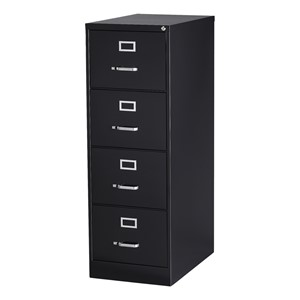
Why Steel Metal Cabinet with Wheels Units Are Critical for Modern B2B Operations
Modern B2B operations treat storage as a flexible production asset. A steel metal cabinet with wheels unit combines secure enclosure with rapid redeployment—enabling responsiveness in automated warehouses, maintenance teams, and light assembly cells.
Rising Demand Driven by Warehouse Automation and Flexible Workspace Needs
Warehouse automation has evolved beyond fixed conveyor lines into modular robotic zones, autonomous mobile robots (AMRs), and dynamic workcells. This demands storage that repositions as quickly as workflows change. Fixed cabinets create bottlenecks when pick zones or assembly stations shift daily—especially in e-commerce fulfillment centers, where layouts are reconfigured multiple times per year to manage SKU proliferation and compressed order-to-delivery windows.
Mobile steel cabinets let supervisors stage tools, spare parts, and safety equipment directly at active workfaces. The safety benefit is well-documented: the National Safety Council recorded 674,100 fall, slip, and trip cases from 2021–2022—many linked to floor clutter and scattered tools. Rollable units reduce tripping hazards, minimize unnecessary reaching and carrying, and support clear walkways. In high-turn environments, that flexibility improves labor productivity, audit readiness, and lean material flow. Maintenance teams also use these units to deploy calibrated tools at the point of use—cutting setup time without compromising security or traceability.
Engineering Advantages: Cold-Rolled Steel Frames + Industrial-Grade Polyurethane Casters
Cold-rolled steel frames deliver higher tensile strength and tighter dimensional tolerances than hot-rolled alternatives—critical for resisting twist or deformation when moving across uneven dock plates or expansion joints. Reinforced corner gussets and full-penetration welded joints further enhance racking resistance under heavy tool loads. Frame thickness—typically specified between 18-gauge (1.0 mm) and 14-gauge (1.6 mm)—directly impacts payload capacity and long-term structural integrity.
Industrial-grade polyurethane casters are equally vital. Unlike hard rubber or nylon, polyurethane absorbs vibration, operates quietly, and resists oil, grease, and common warehouse chemicals. Paired with precision ball bearings and dual-lock swivel mechanisms, they provide stable, controlled movement—even when the cabinet doubles as a workstation. Together, this engineering combination supports rated loads of 300 kg to 800 kg while maintaining maneuverability across multi-shift operations. Specifiers should verify caster diameter (100–125 mm recommended for thresholds and joints) and mounting plate compatibility before finalizing orders.
Essential Sourcing Criteria for Reliable Metal Cabinet with Wheels Units
Load Capacity, Caster Type, and Floor Compatibility Specifications
Begin with steel gauge: specify minimum 0.8 mm cold-rolled steel for industrial B2B use; 0.6 mm is acceptable only for light-duty file applications. Shelf load capacity matters—each shelf should support at least 80 kg, and six-drawer units typically require a total rated load of 400–600 kg. Caster selection must align with floor type and function: polyurethane excels on sealed concrete and epoxy floors—offering quiet, oil-resistant, surface-safe mobility—while rubber may suit rougher surfaces but risks deformation under sustained stationary loads. For reliable control, select total-lock swivel casters on at least two wheels. Critically, load capacity, caster type, and floor compatibility must be specified together: 2023 warehouse safety reviews identify caster-floor mismatch as a leading cause of tip-overs in mobile storage.
Mandatory Certifications: ISO 9001, ANSI/BIFMA X5.9, and RoHS Compliance
ISO 9001 certification confirms repeatable quality management—not just final inspection, but design control and process documentation covering metal furniture or storage equipment manufacturing. ANSI/BIFMA X5.9 is the definitive U.S. standard for mobile storage, validating stability, durability, and load-bearing performance during movement. RoHS compliance ensures coatings, casters, and all subcomponents are free of restricted heavy metals. Always request test reports—not just certificates. For ANSI/BIFMA X5.9, confirm cycle-test results: 10,000 drawer open-close cycles and 1,000 caster rotation cycles reflect current 2024 supplier audit baselines. RoHS documentation must cover every component—including drawer liners and caster housings. These three certifications collectively reduce field failures, simplify import clearance, and mitigate avoidable compliance risk.
Strategic Global Sourcing: Regions, Risks, and Supplier Vetting Best Practices
Dual-Sourcing Shift: Vietnam and Mexico Gain Traction Amid China Supply Diversification
Procurement teams now routinely build dual-supplier networks to hedge against geopolitical volatility, tariff uncertainty, and logistics disruption. Vietnam and Mexico have emerged as credible secondary bases for industrial storage units: Vietnam’s sheet metal furniture exports to North America rose ~17% year-over-year in 2023, while Mexico benefits from shorter lead times under USMCA. Leading buyers adopt a “China plus one” model—retaining Chinese suppliers for cost-efficient volume production, while qualifying Vietnamese or Mexican partners for high-mix, quick-turn orders. Key risks include inconsistent powder-coat finish, variable caster quality, and unauthorized substitution of lighter-gauge steel. Enforce identical material specs and third-party test reports across all regions.
On-Site Verification & Load-Test Validation: A Step-by-Step Audit Checklist
For high-value orders, remote documentation alone is insufficient. Rigorous on-site validation catches defects samples miss—and protects total landed cost. Auditors should:
- Verify raw steel thickness using a calibrated micrometer and inspect weld penetration depth.
- Confirm ISO 9001 process controls are actively implemented—not just certified—on the production line.
- Measure powder-coating thickness post-assembly and assess cabinet squareness with a laser level.
- Conduct a fully loaded push-pull test across the intended floor surface (e.g., epoxy or polished concrete).
- Photograph serial-numbered units before packing to enable traceability.
This sequence validates real-world performance and provides objective evidence for quality claims.
Avoiding Costly Sourcing Pitfalls: Quality Consistency, MOQs, and Lead Time Management
Quality inconsistency remains one of the most expensive hidden risks in metal cabinet with wheels procurement. A supplier may pass initial sampling, yet later batches can drift in weld alignment, caster load rating, or coating thickness. Mitigate this with three mandatory controls before mass production: a documented first-article inspection, in-line checks at welding and caster assembly stages, and a pre-shipment audit aligned precisely to the purchase order. Require dimensional tolerance sheets and batch-level coating thickness records—these reduce returns and keep installation timelines intact.
Minimum order quantity (MOQ) directly affects working capital and agility. Low unit pricing often comes with high MOQs, locking cash into slow-moving inventory. Conversely, low MOQs may raise per-unit costs or extend lead times due to production inefficiencies. Buyers gain leverage by reducing customization, accepting standard dimensions, or agreeing to phased deliveries. For specialty components—like cold-rolled steel or industrial polyurethane casters—a material deposit can unlock lower MOQ tiers without requiring full inventory intake.
Lead time planning must start with clarity: confirm whether quoted timelines reflect EXW (production only) or DAP/DDP (including freight and delivery). Add buffer days for pre-shipment inspection, packaging, port congestion, and final-mile delivery. The table below illustrates trade-offs across sourcing models:
| Sourcing Scenario | Typical MOQ | Unit Cost | Lead Time | Main Risk |
|---|---|---|---|---|
| Standard domestic | Low | Higher | Short | Less customization |
| Balanced overseas | Medium | Medium | Medium | Shipping variability |
| High-volume low-cost | High | Lower | Longer | Inventory lock-up |
Evaluating quality consistency, MOQ, and lead time as an integrated equation—not isolated variables—helps B2B buyers avoid hidden supply chain costs and preserve operational resilience.
Frequently Asked Questions (FAQ)
Why are steel metal cabinets with wheels essential for modern B2B operations?
They offer secure storage and mobility, which is crucial for adapting to dynamic environments in automated warehouses, flexible workspaces, and maintenance tasks.
What are the key engineering components of these cabinets?
Cold-rolled steel frames and industrial-grade polyurethane casters provide durability, maneuverability, and resistance to chemicals and vibration.
How do mobile steel cabinets improve workplace safety?
By reducing tripping hazards, minimizing unnecessary reaching and carrying, and maintaining clear walkways, which are critical in high-turn environments.
What certifications should I look for when sourcing metal cabinets with wheels?
The key certifications are ISO 9001 for quality management, ANSI/BIFMA X5.9 for mobile storage standards, and RoHS compliance for safe materials.
Why is dual-sourcing recommended for metal cabinets?
Dual sourcing helps mitigate risks related to geopolitical volatility, tariffs, and logistics disruptions by diversifying suppliers across regions like Vietnam and Mexico.
What are common sourcing pitfalls to avoid?
Inconsistent quality, overly high MOQs, and unclear lead time specifications can lead to hidden costs and operational delays.
Table of Contents
- Why Steel Metal Cabinet with Wheels Units Are Critical for Modern B2B Operations
- Essential Sourcing Criteria for Reliable Metal Cabinet with Wheels Units
- Strategic Global Sourcing: Regions, Risks, and Supplier Vetting Best Practices
- Avoiding Costly Sourcing Pitfalls: Quality Consistency, MOQs, and Lead Time Management
-
Frequently Asked Questions (FAQ)
- Why are steel metal cabinets with wheels essential for modern B2B operations?
- What are the key engineering components of these cabinets?
- How do mobile steel cabinets improve workplace safety?
- What certifications should I look for when sourcing metal cabinets with wheels?
- Why is dual-sourcing recommended for metal cabinets?
- What are common sourcing pitfalls to avoid?