
 EN
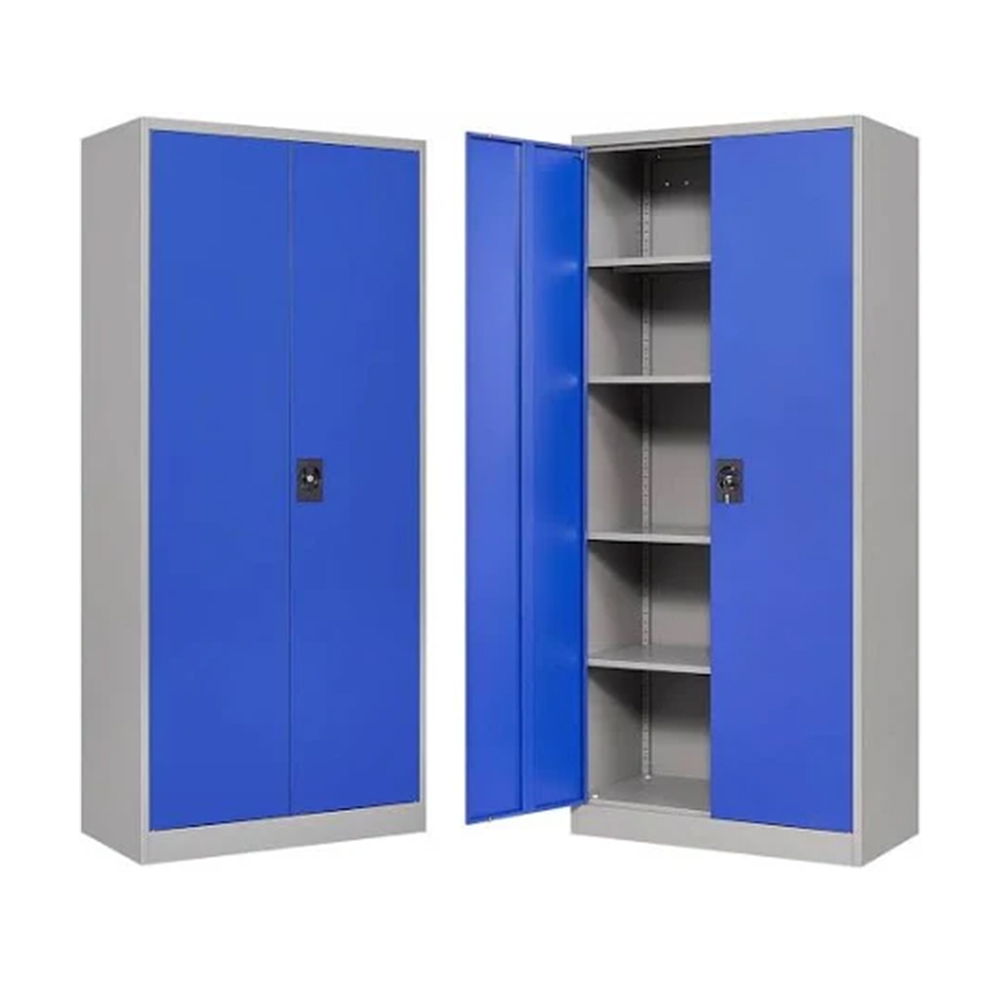
At a dispatch desk the afternoon before a container was due to be sealed, an export coordinator laid four documents side by side: the purchase order, the spec sheet, a test certificate, and the carton marking list. A model suffix on the order did not match the code printed on the certificate, and the packing list named a flat-pack version while the buyer had approved an assembled sample. Nothing was wrong with the steel itself. The risk sat in the paperwork, where a stray digit can send the wrong sheet gauge, the wrong slides, or the wrong carton to a distant warehouse. A metal file cabinet order often turns on this cross-check.
Document Review: Catching a Suffix Mismatch
On the Desk: Four Documents and One Discrepancy
The Luoyang plant behind such orders, founded in 1992 and trading as Huawei Furniture, occupies 30,000 square meters and reaches a monthly output of 10,000 pcs. It was the first in its local cluster to pass third-party factory inspection and the first to offer mail order packing. Those two habits show up at the dispatch desk: inspection records give the certificate its authority, and mail order packing shapes how a single unit survives a parcel network. The coordinator read each metal file cabinet line on the order against the certificate, then against the carton list, flagging any suffix that changed gauge, slide type, or door configuration.
A Certificate That Named a Different Code
Here the certificate covered a two-drawer unit while the order called for a three-drawer version, and the test record did not extend to the taller carcase. Rather than argue over the sample on the shelf, the coordinator requested the test record for the exact ordered code and held the carton marking list until it arrived. Third-party factory inspection adds value precisely here: an outside audit of the quality system makes a certificate traceable to a model, not to a family resemblance. A metal file cabinet shipped under the wrong code is a documentation failure, not a steel failure.
How Do Model Codes Drift From the Approved Spec?
Why a Packing List Can Contradict an Approved Sample
Drift begins when a buyer approves a fully assembled sample but the production order defaults to a knock-down flat-pack to save container space. A flat-pack metal file cabinet and an assembled sample may share a model name while shipping in very different cartons. A spec sheet should state the build form explicitly, name the bolt kit, and list the corner protection included. Without that line, the warehouse receives a carton that looks right and a unit that needs assembly nobody planned for. The fix is a single controlled spec sheet, dated and signed, that the order, the certificate, and the packing list all cite.
Where Corner Protection Shows Up on a Carton
Cardboard or foam guards, edge boards, and a tight fit between the steel carcase and the carton wall keep a powder-coated finish intact through stacking and parcel handling. Mail order packing raises the bar because a single unit travels without the cushion of a full pallet. Ask whether the corner guards suit the stacking height in the container, and whether the carton marking list names the fragile faces. A scuffed corner on arrival is the most common avoidable complaint on an export metal file cabinet.
The Thinner the Gauge, the Tighter the Slide Check
Sheet Gauge, Ball-Bearing Slides, and Cycle Counts
Cold-rolled steel sheet, cut on laser or hydraulic punching equipment and folded on a bending machine, sets how a carcase resists racking. For a metal file cabinet, thinner gauge demands more reinforcement ribs and closer attention to spot welds, so the spec sheet should state the gauge rather than leave it to a catalog photo. Ball-bearing slides need a rated drawer load and a cycle test result tied to the ordered code. Degreasing and phosphating before electrostatic powder coating, then a controlled curing oven, decide whether the finish survives a long sea freight.
Reading a Flat-Pack Carton Before It Ships
A flat-pack, or knock-down, metal file cabinet arrives as a set of panels, a bolt kit, and a hardware bag. The pre-shipment check confirms that every panel, hinge, cam lock, slide pair, and leveling foot appears on the parts list, and that the assembly sheet matches the actual hole pattern. Cycle a sample assembly once on the line, check that drawers track without binding, then re-pack with corner protection. The parts list is the only proof that a metal file cabinet will reassemble correctly, and the carton is the last place a documentation error can still be caught.
Four Standards Shape the Folder
What ISO, OSHA, NFPA, and ANSI Add to the Paperwork
A sourced metal file cabinet is a documented product, so the standards live in the folder as much as in the factory. ISO 9001 covers the quality management system that keeps a repeat order consistent with the approved sample, which is the basis for trusting a model code. OSHA 1910.176 addresses material storage and anti-tip control for the tall units that a warehouse will stack or anchor. NFPA 101 governs egress width where a bank of cabinets meets a corridor. ANSI Z535.4 covers product safety labels and carton markings, the exact wording that a carton marking list should reproduce.
Buying a metal file cabinet: require one controlled spec sheet that fixes the model code, sheet gauge, slide rating, lock type, and build form, and ask for the test certificate that names the exact ordered suffix before the order is released.
Inspecting a metal file cabinet on arrival: match the carton marking to the purchase order, verify the certificate code, open one carton to confirm the bolt kit and corner protection, and cycle a sample drawer before signing the delivery note.
Using a metal file cabinet: assemble knock-down units on a level surface, fit leveling feet and anti-tip brackets before loading, put heavy files in the lower drawers, and keep the carton and assembly sheet until the bank is in service.
Maintaining a metal file cabinet: retighten bolts and leveling feet after the first weeks of use, wipe slide tracks clear of grit, check that safety labels remain legible, and touch up any coating chip at a welded corner before corrosion spreads.
Frequently Asked Questions
Q: Why does a model suffix need to match the test certificate?
A: A suffix usually encodes a real change such as drawer count, gauge, or slide type, so a certificate written for a different code does not cover the unit being shipped. Ask for the test record tied to the exact ordered suffix and compare it with the purchase order. Third-party factory inspection makes that record traceable. A mismatch is far easier to resolve at the dispatch desk than after a container reaches a distant warehouse.
Q: What should a spec sheet state about sheet gauge?
A: A controlled spec sheet should name the cold-rolled steel sheet gauge in writing, along with the reinforcement rib layout and the rated drawer load, rather than rely on a catalog photograph. Gauge drives how a carcase resists racking under repeated drawer cycles. Read it together with the slide rating and the cycle test result, because a thinner body needs more ribs and closer weld control. If the gauge is missing, the order has no fixed baseline to check against.
Q: How does flat-pack packing change the arrival inspection?
A: A flat-pack unit arrives as panels, a bolt kit, and a hardware bag, so the inspection shifts from a finished cabinet to a parts count. Confirm every panel, hinge, slide pair, cam lock, and leveling foot against the parts list, and check that the assembly sheet matches the actual hole pattern. Cycle one assembled drawer before accepting the batch. A missing bracket found after the container is sealed becomes a claim rather than a quick swap.
Q: When are corner protectors and edge guards worth the extra carton cost?
A: They pay off whenever a single unit travels through a parcel network or under a mixed stack in a container, which is the normal case for mail order packing. Edge boards and snug corner guards keep a powder-coated finish intact through handling and stacking. Ask whether the guards suit the planned stacking height and whether the carton marking names the fragile faces. A scuffed corner is the most common avoidable complaint on an export metal file cabinet.
Q: Which standard covers the safety labels on a shipped carton?
A: ANSI Z535.4 addresses product safety labels and markings, including the wording and format that a carton marking list should reproduce. It sits alongside ISO 9001 for production consistency, OSHA 1910.176 for storage stability, and NFPA 101 for egress width. A coordinator uses these references to check the folder, not to judge the steel alone. Clear, accurate carton markings help a warehouse handle and store the unit correctly from the first day.
Q: How does mail order packing differ from a standard bulk carton?
A: Mail order packing is built for a single unit travelling alone through a parcel network, so it relies on tighter corner protection, edge boards, and a carton fitted closely to the product. A standard bulk carton assumes the cushion of a full pallet and shared stacking. The maker in Luoyang was the first locally to offer this packing style, and it changes what the pre-shipment check looks for: guards, fit, and legible markings rather than pallet count alone.