
 EN
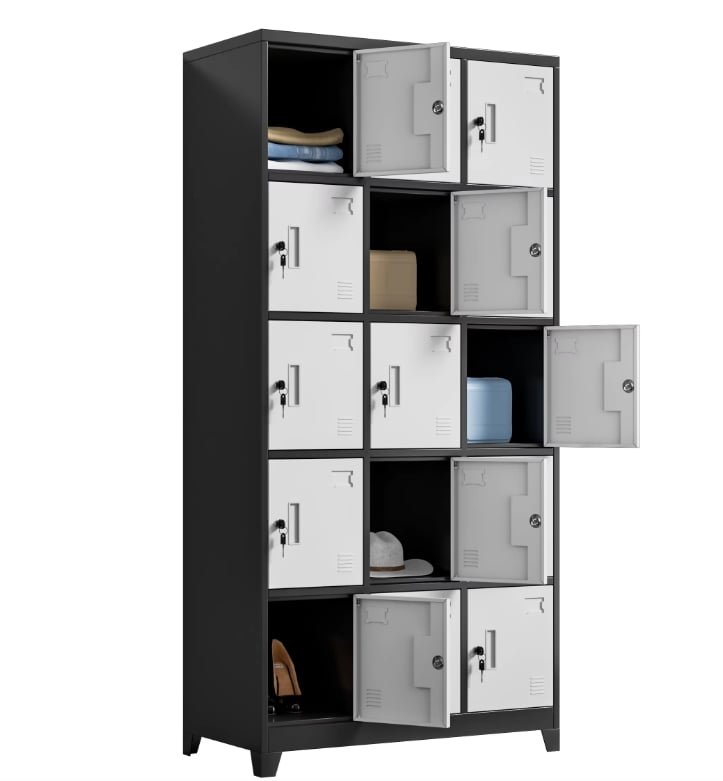
A bid review for a warehouse employee locker project put two offers on the same table. One supplier quoted fully assembled bays; the other quoted knock-down units in flat cartons, with bolts and a drawing in each box. The evaluation team stacked the cartons beside one finished bay and started counting what actually filled a delivery. Freight volume, assembly time on a concrete floor, and the way a shelf sat under a loaded tote mattered more than either cover letter. For a B2B buyer, a storage locker decision is often a packing and assembly decision first, and only later a question of finish.
A Warehouse Tender That Compared Two Builds
What Sat on the Two Sample Pallets
The assembled bay arrived as one rigid box, already square, with doors hung and a cam lock fitted. The knock-down offer arrived as a stack of flat panels, a bag of bolts, shelf clips, and a folded sheet showing the build order. Neither presentation was inherently better; each shifted work to a different place. The finished bay demanded more space on a truck, while the flat pack demanded hands and time on site. Laying the parts out in sequence revealed which supplier had thought about the person doing the assembly. That observation set the tone for how the storage locker tender would be judged.
Counting Cartons Instead of Units
Freight is where a flat pack earns its keep. Panels that nest together fill far less volume than an assembled carcass, which changes how many units fit in a container. A Luoyang maker, the first in its local industry to offer mail order packing, treats the carton as part of the product. Corner protectors, edge guards, and a stacking plan protect the coating on a long sea leg. Ask how a storage locker carton is built before comparing unit prices.
Where Freight Math Meets Assembly Risk
How a Loose Bolt Pattern Shows Up Later
A knock-down joint is only as good as its hardware and its drawing. If bolt holes are drilled a little wide, or if the bolt grade is left to the installer, the carcass can rack the first time someone leans on a door. Threads that are cross-threaded on site stay cross-threaded, and a frame that starts out of square never fully recovers. The risk is a storage locker that looks fine on delivery day and binds a season later. Ask for the bolt specification, the hole tolerance, and a torque note in the assembly sheet, then check them against the sample build.
Why Shelf Load Belongs in the Bid
Shelf load is where a tender often stays vague. A shelf that rests on small clips carries weight differently from one whose ends are captured in the side panels, and a buyer who writes only a shelf count has no handle on deflection. Workers store tool bags, boots, and sealed cartons, so a shelf can see a heavy point load rather than an even spread. Ask how the declared shelf load was verified and whether the shelf is reinforced or folded. Put the answer in the storage locker specification so later deliveries have a measurable reference.
Knock-Down Joints Decide Long-Term Square
The Case for Captured Shelf Ends
Two details separate a rigid knock-down build from a loose one. A cam bolt pulls two panels together as it turns, drawing a joint tight without relying on installer finesse, while a plain screw into a predrilled hole depends on alignment and patience. Shelf ends captured in folded channels resist sagging better than ends balanced on clips, because the side panel shares the load. CNC bending gives those channels a repeatable shape so the same part fits every bay. Together they explain why one storage locker stays square after assembly and another slowly settles.
Assembled Versus Knock-Down on the Floor
The choice is really about where squareness is created. A welded, assembled bay leaves the factory square and stays that way, at the cost of freight volume and a higher chance of a dented corner in transit. A knock-down unit creates its squareness on site, which needs a flat floor, a careful sequence, and a torque check once the frame is up. Custom orders built per a buyer plan or sample can push either way, since a design team can add a reinforcement rib or change the shelf supports. Neither build is a storage locker shortcut; each is a different division of labor.
Anchoring, Aisles, and the Documents Behind Them
Anti-Tip, Egress, and Quality in Four Names
ISO 9001 sits behind the repeatable hole positions and bending sequence that let a flat pack go together the same way every time. OSHA 29 CFR 1910.176 addresses securing stored material against tipping, which matters once a long bank of storage locker units stands on a warehouse floor. NFPA 101 concerns clear aisles and egress width, so a bank cannot narrow a route workers use to leave. ANSI/BIFMA X5.9 is the natural home for shelf load and durability expectations. Each document answers a different question, and a tender reads stronger when each requirement is tied to the right one.
Buying a storage locker: state whether the tender wants knock-down or assembled units, name the bolt grade and hole tolerance, declare the shelf load, and ask for corner protection and a stacking plan. Request one sample carton and one assembled bay so the comparison uses real parts rather than a description.
Inspecting a storage locker on arrival: check carton corners for crushed guards, count the bolt bags against the drawing, look for coating chips at panel edges, and confirm shelf clips or channels are present. Assemble one unit fully and check that doors sit square before signing the delivery note.
Using a storage locker: anchor a long bank against tipping, keep aisles clear for egress, and spread heavy items across shelves instead of loading one end. Tighten bolts after the first days of use, since a knock-down joint can settle, and keep the assembly drawing with the maintenance file.
Maintaining a storage locker: re-torque frame bolts on a schedule, check shelf ends for bending, and touch up coating chips before bare metal spreads. Replace missing clips in matched sets and re-level feet if a bay starts to rack. Keep spare bolts and one printed drawing on site.
Frequently Asked Questions
Q: What separates a knock-down unit from an assembled one on a tender?
A: An assembled bay leaves the factory as a rigid, welded box with doors already hung. A knock-down unit ships as flat panels, bolts, and a drawing, and reaches its final shape on site. The tender should say which one it wants, because freight volume, handling, and where squareness is created all change. Ask for one of each so the comparison uses real parts.
Q: How should shelf load be stated in a bid document?
A: Write it as a declared load with the support method named, not just a shelf count. A shelf on clips behaves differently from one whose ends sit in folded channels, and a point load from a tool bag is harder than an even spread. Ask how the figure was verified and whether the shelf is reinforced. Put the answer in the specification.
Q: Why do bolt patterns matter more than bolt count?
A: Count alone says nothing about fit. Hole position, tolerance, and bolt grade decide whether a joint pulls tight or racks the first time a door is leaned on. A cam bolt draws panels together, while a plain screw depends on careful alignment. Ask for the bolt specification and a torque note, then build one sample unit and check that the frame stays square.
Q: When is anti-tip anchoring required for a locker bank?
A: A tall or lightly loaded bank on a busy warehouse floor can tip if it is pushed or climbed, so anchoring belongs in the layout from the start. OSHA 29 CFR 1910.176 covers securing stored material against tipping. Decide the anchor points before delivery, check that the floor suits them, and confirm the bank is fixed before users fill the compartments.
Q: Which arrival checks catch a poorly assembled frame?
A: Assemble one unit fully before signing the delivery note. Check that doors sit square, that the latch meets its strike, and that shelf ends seat evenly. Count bolt bags against the drawing and look for coating chips at panel edges. If a knock-down frame needs forcing to close, note it by unit number and have the supplier correct the drawing.
Q: How does flat packing change the receiving routine?
A: Flat packing shifts work to the dock. Cartons nest tightly, so count panels, hardware bags, and shelf parts against the packing list rather than just counting boxes. Check corner guards and edge protection for crush damage, and keep the assembly drawing from each carton. A plant with a documented packing flow can describe how cartons are stacked for a long sea leg.