
 EN
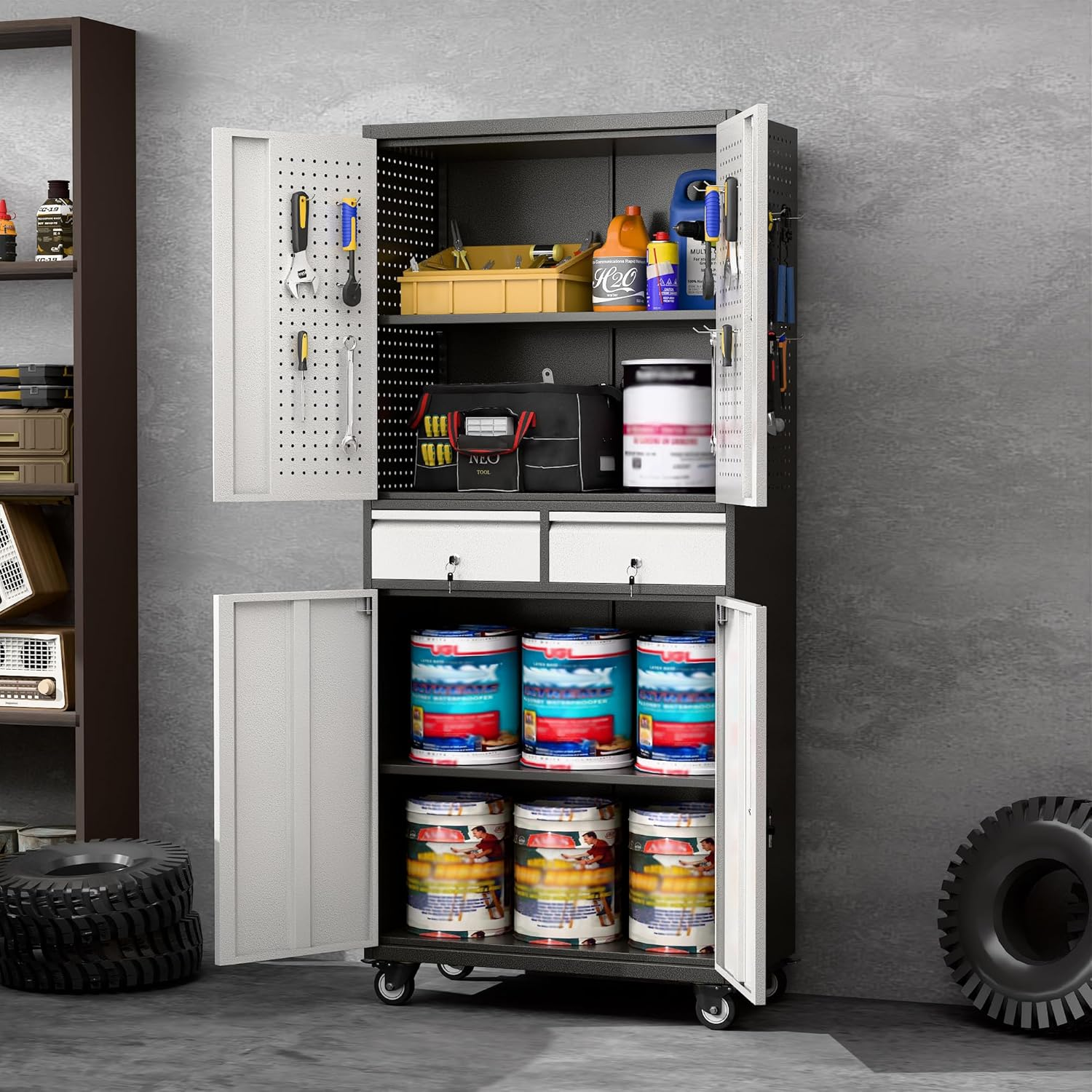
Why Steel Gauge, Construction, and Load Capacity Define B2B Suitability
The 24-Gauge Standard: Structural Integrity Meets Commercial Durability for Metal Cabinet for Garage Use
Commercial metal cabinet for garage sourcing typically begins with steel gauge—and 24-gauge cold-rolled steel remains the practical baseline for most multi-unit facilities. At approximately 0.024 in (0.6 mm) thick, it balances dent resistance, weight, and cost for high-traffic storage. While not the thickest option available, 24-gauge resists daily door slams, tool impacts, and shifting contents more effectively than lighter 26-gauge alternatives. It also supports predictable per-unit shipping and installation costs across multi-site rollouts. An industry survey of 640 B2B buyers from 2024 to 2025 found material quality and build construction ranked first at 30%, ahead of security and price—indicating procurement teams prioritize structural integrity before unit cost. Still, 24-gauge alone doesn’t guarantee performance: panel forming, welding quality, and reinforcement determine long-term resilience under repeated loading and unloading. Treat 24-gauge as a minimum specification for standard-duty garage storage—and require verification for high-load or wall-mounted applications.
Real-World Load Performance: Verified Shelf Capacities (Up to 1,200 lbs) in High-Traffic Garage Environments
Garage environments rarely apply loads evenly. Technicians may stack brake rotors, transfer cases, or bulk fasteners on a single shelf—creating concentrated stress points that exceed uniform load assumptions. For this reason, B2B buyers must compare verified shelf capacities—not just advertised total cabinet ratings. A well-constructed 24-gauge cabinet with reinforced shelves can support 200–400 lb per shelf; high-capacity designs featuring 14- or 16-gauge frames and braced shelf pans reach up to 1,200 lb per shelf under uniform load. But real-world performance hinges on shelf span, mounting method, and load distribution—not just peak numbers. Vibration, repeated impacts, and frequent reconfiguration accelerate wear on spot welds and unprotected edges. Facility managers should request third-party test data specifying maximum static load per shelf, anchor point count, and whether testing included dynamic conditions. Avoid cabinets that list only total cabinet capacity without clarifying shelf-level ratings or load placement assumptions.
Beyond Thickness: How Reinforced Ribbing, Seam Welding, and Frame Design Outperform Higher-Gauge Claims
Thicker steel does not automatically equal stronger storage. A 20-gauge cabinet with flat shelves can deflect more than a 24-gauge unit with ribbed panels and full seam welding. Reinforced ribbing increases bending resistance by creating load-distributing channels across the shelf surface. Seam welding along high-stress edges prevents separation and racking—especially critical in mobile or frequently reconfigured garage bays. Frame design is equally decisive: corner gussets, rear cross braces, and a welded base frame reduce twisting when cabinets are moved across uneven floors. Even modest reductions in steel thickness can outperform higher-gauge claims if the structure is engineered to resist torsional and lateral loads. B2B evaluators should inspect construction details—number and location of welds, rib depth, and base reinforcement—rather than accept gauge as a standalone quality signal. Request samples or engineering drawings showing how shelves attach and where reinforcing elements are placed.
Material Science & Warranty Clarity: Selecting Corrosion-Resistant Metal Cabinet for Garage Installations
Cold-Rolled vs. Stainless Steel: ASTM Standards (A653 vs. A240) and Humidity Resistance for Garage-Specific Applications
Base material and protective standard define long-term corrosion resistance in metal cabinet for garage use. ASTM A653 governs cold-rolled steel with zinc or zinc-iron alloy coatings—a cost-effective galvanic barrier against moisture. ASTM A240 covers chromium-nickel stainless steel plate, sheet, and strip, offering inherently higher resistance to humidity, chlorides, and cleaning chemicals. In garages exposed to condensation, road salt, and degreasers, A240 stainless (304 or 316 grades) significantly reduces pitting at cut edges and weld points. Cold-rolled A653 cabinets perform well with full powder-coat coverage—but scratches, assembly holes, or edge damage expose bare steel. For high-humidity or coastal facilities, specify A240 stainless or a heavier A653 coating such as G90.
Decoding B2B Warranties: 10-Year Structural Guarantees vs. 5-Year Finish Coverage — What Facility Managers Actually Need
Facility managers must distinguish structural warranties from finish coverage. A 10-year structural guarantee typically covers load-bearing frames, shelves, welds, and locking mechanisms against defects in materials and workmanship. A 5-year finish warranty usually applies to powder-coat adhesion, rust-through, and fading under normal garage use—but excludes scratches, chemical exposure, or installation damage. These terms are not interchangeable. Before ordering, confirm whether coverage is prorated, transferable, and includes labor or replacement shipping. Ask suppliers to tie warranty language directly to ASTM A653 or A240 material specifications. Most importantly, match environmental exposure—such as salt air or persistent condensation—to a written finish warranty that explicitly covers corrosion resistance, not just paint adhesion.
Streamlining B2B Procurement: CAD Integration, Compliance Docs, and Scalable Delivery for Metal Cabinet for Garage Projects
Essential Pre-Order Documentation: Shop Drawings, Anchoring Specs, and Load Diagrams for Facility Approval
Before purchasing metal cabinet for garage facilities, B2B buyers should request three core documents: 2D shop drawings, anchoring specifications, and static load diagrams. Native CAD files in STEP or IGES formats prevent translation errors during layout reviews. Shop drawings verify cutout locations, clearances, and door swing paths. Anchoring specs detail fastener sizes, embedment depths, and required floor thickness. Load diagrams show shelf capacity ratings and center-of-gravity limits at full rated load. A complete digital package accelerates facility approval by reducing clarification cycles. Ask suppliers to include tolerances for critical mounting points and finish callouts. Missing load diagrams routinely delay permit sign-off and installation scheduling.
B2B Value Benchmarking: Total Cost of Ownership Across Top Garage Metal Cabinet Brands
For B2B buyers, total cost of ownership (TCO) for metal cabinet for garage installations extends far beyond unit price. Procurement teams must weigh acquisition cost, assembly labor, anchoring hardware, finish longevity, and replacement downtime. A cabinet priced 30% lower upfront can become the most expensive option if it fails within three years—or requires constant shelf re-leveling due to frame flex.
| Segment | Typical Unit Price | Verified Shelf Load | Finish Warranty | Structural Warranty | Primary TCO Driver |
|---|---|---|---|---|---|
| Economy direct-import | Under $150 per cabinet | Up to 180 lb per shelf; ~1,080 lb total | 1 year or limited | 5 years limited | Replacement frequency, wall anchoring, uneven load risk |
| Mid-range reinforced | $1,000–$2,000 per set | 400–600 lb per shelf; up to 1,200 lb claimed | 5 years | 10 years | Assembly labor, finish upkeep in humid garages |
| Premium modular | $1,500–$3,000+ per set | 600–800 lb per shelf; 1,200+ lb total verified | 5–10 years | Lifetime or 10+ years | Higher capital cost, lower lifecycle replacement |
Based on current distributor price sheets (2024), a practical benchmark is cost per rated pound over a 10-year service window. Economy models may cost $0.14 per rated pound but often require replacement within 3–5 years. Premium cabinets may cost $0.22–$0.30 per rated pound while carrying 10-year structural warranties and demonstrably lower failure rates. Facility managers should request load diagrams, anchoring specifications, and warranty exclusions before final quote comparison—ensuring low initial bids don’t mask higher lifecycle costs.
FAQs
Why is 24-gauge steel commonly used for garage metal cabinets?
24-gauge steel offers a balance of durability, cost-effectiveness, and dent resistance, making it suitable for high-traffic garage environments. While not the thickest option, it withstands daily wear and tear better than lighter alternatives.
What should I look for in a warranty when buying B2B metal cabinets?
Ensure the warranty covers both structural integrity and finish quality. Confirm the duration, whether coverage is transferable, and whether it applies to defects, corrosion, or damage under normal conditions.
How do reinforced ribbing and seam welding enhance cabinet strength?
Reinforced ribbing distributes loads evenly to reduce bending and deflection, while seam welding prevents separation and enhances resistance to torsional stress, critical in high-traffic or mobile garage setups.
What documentation is necessary for approving metal cabinet installations?
Pre-order documentation should include shop drawings, anchoring specifications, and load diagrams. These documents ensure proper facility planning and compliance during procurement.
How does total cost of ownership (TCO) factor into choosing garage metal cabinets?
TCO involves evaluating acquisition costs, warranty terms, maintenance needs, and lifecycle durability. Lower upfront costs may result in higher long-term expenses due to frequent replacements or failures.
Table of Contents
-
Why Steel Gauge, Construction, and Load Capacity Define B2B Suitability
- The 24-Gauge Standard: Structural Integrity Meets Commercial Durability for Metal Cabinet for Garage Use
- Real-World Load Performance: Verified Shelf Capacities (Up to 1,200 lbs) in High-Traffic Garage Environments
- Beyond Thickness: How Reinforced Ribbing, Seam Welding, and Frame Design Outperform Higher-Gauge Claims
- Material Science & Warranty Clarity: Selecting Corrosion-Resistant Metal Cabinet for Garage Installations
- Streamlining B2B Procurement: CAD Integration, Compliance Docs, and Scalable Delivery for Metal Cabinet for Garage Projects
- B2B Value Benchmarking: Total Cost of Ownership Across Top Garage Metal Cabinet Brands
-
FAQs
- Why is 24-gauge steel commonly used for garage metal cabinets?
- What should I look for in a warranty when buying B2B metal cabinets?
- How do reinforced ribbing and seam welding enhance cabinet strength?
- What documentation is necessary for approving metal cabinet installations?
- How does total cost of ownership (TCO) factor into choosing garage metal cabinets?